A restaurant plate is easy to underestimate.
At first glance, it is simply something that carries food from the kitchen to the table. But for a restaurant chain, the right plate does much more. It contributes to the visual identity of the brand, affects how food is presented in photographs, influences the dining experience, and has to survive repeated washing, stacking, handling, and daily service.
This is where rustic finish earthenware plates have become increasingly interesting for restaurant groups, cafés, boutique hotels, farm-to-table concepts, and foodservice brands.
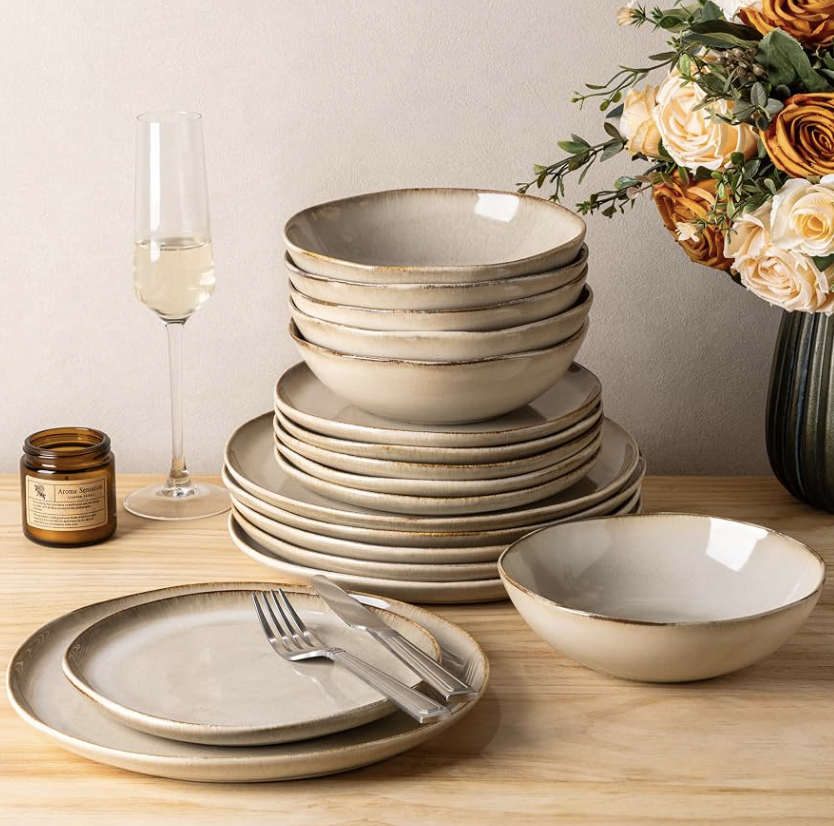
Instead of looking perfectly uniform and overly polished, rustic ceramic plates can bring warmth, texture, earthy colors, subtle glaze variation, and a handcrafted feeling to the table. That aesthetic works particularly well for restaurants built around natural ingredients, Mediterranean cuisine, farmhouse concepts, modern casual dining, artisan bakeries, and specialty cafés.
But there is an important difference between buying rustic-looking plates for a home and sourcing them for a restaurant chain.
A restaurant chain may need hundreds or thousands of plates, consistent dimensions across batches, food-contact compliance, dependable packaging, replacement availability, and stable glaze colors over multiple production runs.
That makes the manufacturer selection much more important.
In this guide, we look at 5 manufacturers and ceramic suppliers worth evaluating for rustic-finish earthenware or closely related ceramic restaurant plates, with a focus on what international buyers should actually look at before placing a bulk order.
Quick answer: The best supplier for rustic restaurant plates is not necessarily the company with the most attractive catalog. For restaurant chains, prioritize commercial durability, finish consistency, customization capability, food-contact compliance, production capacity, replacement support, and reliable export packaging.
What Makes Rustic Finish Earthenware Plates Different?
Rustic finish does not necessarily mean that a plate is poorly finished or intentionally imperfect.
In commercial tableware, “rustic” usually describes a visual language rather than a lack of quality control.
Typical characteristics include:
- Earthy or muted glaze colors
- Speckled or reactive glaze effects
- Slightly irregular organic shapes
- Hand-finished or handmade-looking surfaces
- Visible clay or raw ceramic edges
- Matte, satin, or semi-matte finishes
- Brown, beige, cream, olive, blue, charcoal, and terracotta-inspired tones
- Subtle variations between individual pieces
These characteristics can make food look more natural and approachable.
For example, a warm beige plate can make roasted vegetables, sourdough, grilled meat, and pasta look more rustic and generous. A dark green or brown reactive glaze can create a strong contrast with lighter-colored food.
That is one reason rustic ceramic tableware is particularly popular in restaurants that want their table setting to feel less formal and more authentic.
However, the key challenge for a restaurant chain is controlled variation.
You want the plates to look handmade without having one plate noticeably darker, larger, thinner, or more warped than another.
That is where an experienced ceramic manufacturer makes a major difference.
Why Restaurant Chains Are Choosing Rustic Ceramic Plates
The appeal goes beyond aesthetics.
1. Rustic finishes support restaurant branding
A restaurant’s tableware can become part of its visual identity.
Think about how easily customers recognize a certain restaurant atmosphere from a single photograph. The table, plate, food, napkin, and glassware all contribute to that impression.
Rustic dinner plates can communicate:
- Natural
- Handmade
- Premium casual
- Farm-to-table
- Organic
- Mediterranean
- Artisan
- Warm and welcoming
For a multi-location restaurant chain, this can be particularly useful because the tableware helps maintain a consistent atmosphere across different stores.
2. They photograph well
Restaurant brands increasingly depend on food photography and social media.
Highly reflective white plates can sometimes make food photography look flat or overly clinical. A textured or softly colored rustic plate can create more visual depth.
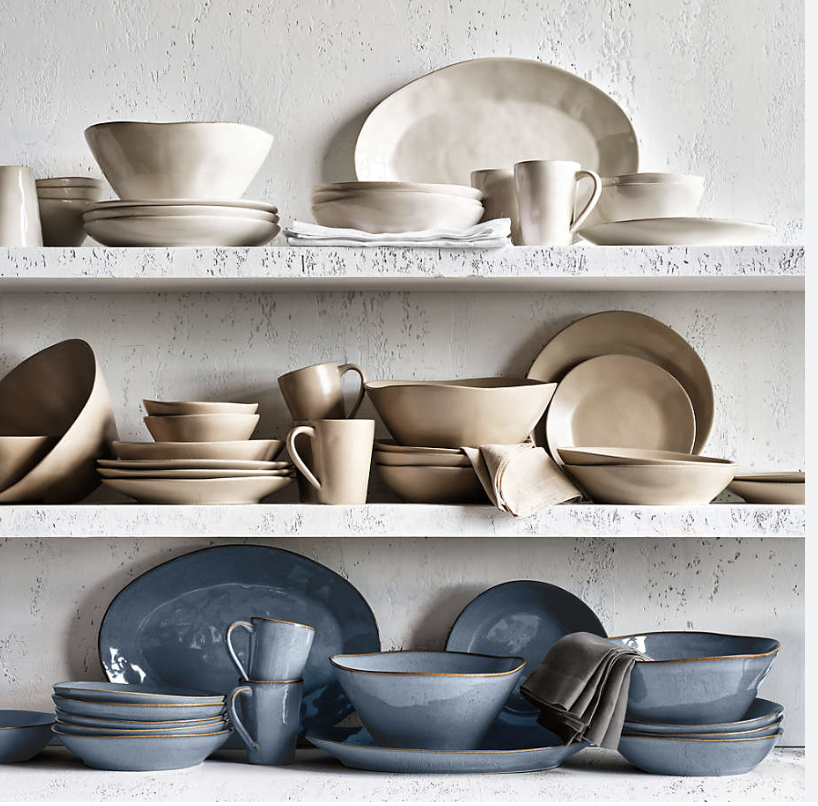
The plate should still support the food rather than compete with it.
This is why many buyers prefer neutral rustic ceramic dinner plates with controlled glaze variation instead of highly decorative patterns.
3. Rustic designs can make a restaurant feel more premium
Interestingly, rustic does not have to mean inexpensive.
A carefully designed plate with a soft reactive glaze, organic rim, and consistent proportions can create a handcrafted premium appearance.
This is especially useful for:
- Casual fine dining
- Boutique restaurants
- Hotel restaurants
- Brunch chains
- Artisan cafés
- Farm-to-table restaurants
- Modern European restaurants
- Bakery and breakfast concepts
5 Manufacturers Worth Evaluating for Rustic Finish Restaurant Plates
The following companies are not presented as a strict ranking from #1 to #8. They represent different manufacturing strengths, regions, materials, and business models.
For buyers, this distinction matters.
Some specialize directly in earthenware, while others are stronger in stoneware or vitrified ceramic. If your design brief specifically requires earthenware clay, confirm the body composition and firing specifications before requesting a quotation.
1. Ceriart – Portugal
Ceriart is one of the more relevant manufacturers to investigate when the project specifically involves earthenware.
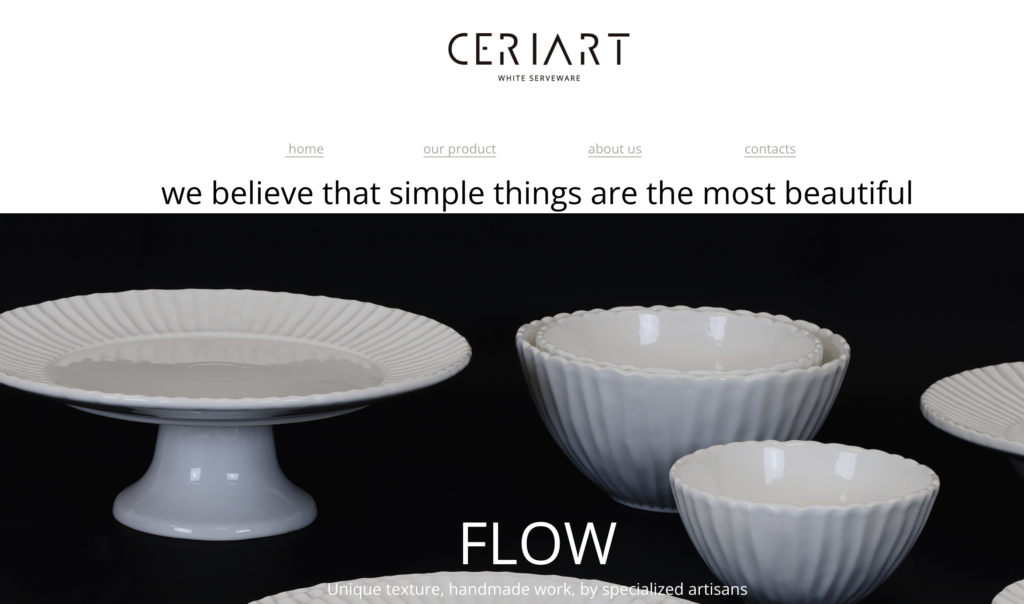
The company states that its production is focused on serveware and tableware in earthenware and combines modern technologies with Portuguese traditional ceramic techniques. It also highlights customized solutions and production capacity of more than 200,000 pieces per month.
For restaurant chains, its value is not simply the Portuguese aesthetic. The more important point is its experience producing functional tableware at a commercial scale.
Ceriart may be worth considering when you need:
- Earthenware restaurant plates
- Large-format serving pieces
- Custom ceramic designs
- European ceramic production
- Rustic or traditional ceramic aesthetics
- Long-term B2B development
If your concept is inspired by Mediterranean, Portuguese, farmhouse, or artisan dining, Portuguese manufacturing can also provide useful design references.
2. Matceramica – Portugal
Matceramica is another strong candidate for buyers looking for a large-scale Portuguese ceramic manufacturer.
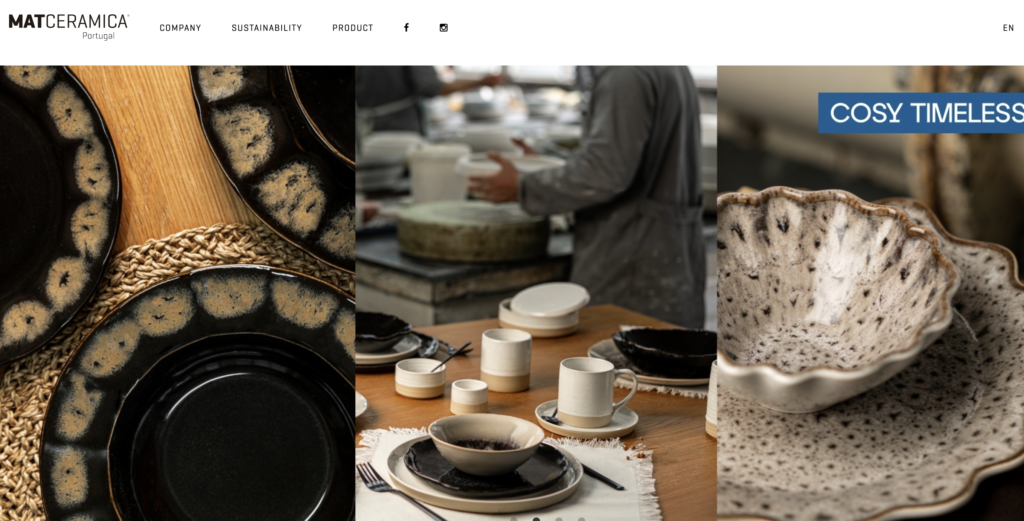
Founded in 2000, Matceramica produces both stoneware and earthenware tableware ceramics. Its factory covers approximately 30,000 m², employs more than 500 people, and reports monthly output of more than one million pieces. The company also states that about 90% of its production is exported.
This scale is particularly relevant to restaurant chains.
A restaurant group does not just need an attractive prototype. It needs the manufacturer to reproduce the same shape, dimensions, colors, and finishing standards across repeat orders.
Matceramica is also interesting for buyers looking for more advanced production technology. The company highlights robotics, CNC, 3D printing, and digital printing applied to tableware.
For buyers developing custom rustic earthenware plates for restaurant chains, this combination of traditional ceramic aesthetics and industrial production capability is worth exploring.
3. Nocal Ceramics – Portugal
Nocal Ceramics is a smaller-scale Portuguese ceramic manufacturer with a strong connection to earthenware.
The company offers dinnerware alongside other ceramic categories and positions itself around contemporary products developed according to market requirements.
Nocal Ceramics official website
For buyers, a company like Nocal can be interesting when the design is more important than simply sourcing a generic white restaurant plate.
Its product positioning is closer to the traditional ceramic manufacturing culture of Portugal, which can be a useful source of inspiration for:
- Rustic ceramic plates
- Organic tableware shapes
- Earth-tone finishes
- Decorative ceramic collections
- Boutique hospitality projects
The important point is to discuss production capacity early if your restaurant group has a very large rollout schedule.
4. HF Coors – USA
HF Coors takes a different approach.
Rather than focusing specifically on rustic earthenware, HF Coors specializes in commercial-grade ceramic dinnerware for restaurants, hotels, and foodservice operations.
Its dinnerware is made in Tucson, Arizona, using vitrified ceramic and is designed for demanding commercial environments. The company highlights chip resistance, commercial dishwasher ratings, oven safety up to 500°F, and lead- and cadmium-free certification.
Why include a vitrified ceramic manufacturer in a guide about rustic-finish earthenware?
Because restaurant procurement is ultimately about performance plus appearance.
A buyer may love the visual character of rustic earthenware but discover that the intended restaurant environment requires a more durable ceramic body.
HF Coors is therefore useful as a benchmark for commercial durability.
If your chain operates high-volume locations where plates are washed and handled dozens of times per day, durability should be considered alongside the rustic finish.
5. COSTA NOVA Industria Group – Portugal
COSTA NOVA Industria Group is especially relevant as a reference point for premium European ceramic tableware.
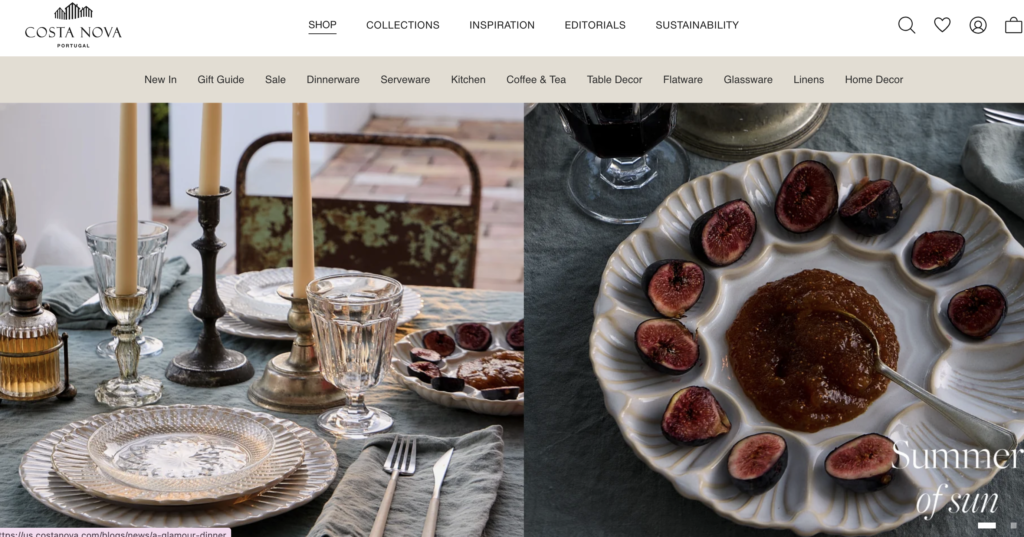
The group traces its roots to Grestel, established in 1998, and today operates four factories. It manages COSTA NOVA and Casafina by COSTA NOVA and also produces private-label tableware for international brands.
Its core material is stoneware rather than conventional earthenware, so buyers should not treat it as a direct material-for-material comparison.
But it is an excellent reference for understanding how natural colors, organic forms, premium ceramic finishes, and commercial tableware can work together.
For restaurant chains, the private-label capability is especially relevant because it demonstrates the type of production model needed when a ceramic design has to move beyond retail quantities into a larger B2B program.
Quick Comparison of the 8 Manufacturers
| Manufacturer | Region | Main Ceramic Focus | Rustic-Finish Relevance | Best For | Buyer Consideration |
|---|---|---|---|---|---|
| Ceriart | Portugal | Earthenware tableware | High | Custom earthenware and European-style collections | Confirm exact glaze and body specifications |
| Matceramica | Portugal | Earthenware & stoneware | High | Large-volume commercial programs | Strong production scale; verify target finish |
| Nocal Ceramics | Portugal | Earthenware and tableware | High | Boutique and contemporary ceramic concepts | Confirm capacity for chain-wide rollouts |
| HF Coors | USA | Vitrified ceramic | Medium | Heavy commercial restaurant use | Better durability benchmark than direct earthenware match |
| COSTA NOVA Industria Group | Portugal | Stoneware | High | Premium hospitality and private label | Stoneware rather than conventional earthenware |
The table highlights an important sourcing lesson: “rustic finish” and “earthenware” are two separate specifications.
You can reproduce the rustic visual style using different ceramic bodies.
Therefore, before asking for a quotation, decide whether the clay body itself is non-negotiable or whether the appearance is the primary requirement.
5 Well-Known Ceramic Tableware Brands Worth Studying for Rustic Design Inspiration
Manufacturers are not the only useful source of information.
Restaurant buyers can also study established tableware brands to understand how leading companies translate handmade character into scalable products.
The following five brands are useful references, but they should be viewed as design benchmarks rather than direct factory recommendations.
East Fork
East Fork is well known for earthy ceramic dinnerware and a warm, handmade visual language.
Its current dinnerware range includes dinner plates, side plates, bowls, serving pieces, and sets in glaze colors such as Panna Cotta and Black Mountain.
For restaurant buyers, the key takeaway is the restrained use of color.
Instead of covering the plate with elaborate decoration, the clay, glaze, silhouette, and subtle surface variation create the personality.
That is a useful direction if you want minimalist rustic dinner plates for modern restaurants.
Jono Pandolfi Designs
Jono Pandolfi Designs has a particularly strong connection with professional restaurants.
The company states that its ceramics are made in the USA and designed for commercial kitchens, with customization options including clay bodies and glazes.
Jono Pandolfi Designs official website
Its restaurant-focused approach is a good example of how plate design can balance an artisan appearance with real-world commercial requirements.
For restaurant procurement teams, this is perhaps the most important lesson: rustic does not mean fragile.
Fable
Fable uses hand-finished ceramic dinnerware produced in Portugal, with organically shaped pieces, semi-matte and glossy options, and distinctive speckled finishes.
Its speckled and organic aesthetic is especially relevant to buyers searching for:
speckled ceramic dinner plates, hand-finished rustic dinnerware, and organic-shaped restaurant tableware.
The brand demonstrates how small surface details can make a simple plate feel more handcrafted without using complicated decoration.
Heath Ceramics
Heath Ceramics is another valuable reference for buyers interested in natural variation.
Heath emphasizes natural variations in glaze color, texture, and finish, while also maintaining quality standards before pieces leave its factory. Its Sausalito factory continues to produce dinnerware and tableware with a team of craftspeople.
Heath Ceramics official website
This is a useful model for rustic design because it shows that controlled variation can become part of the product identity.
COSTA NOVA
COSTA NOVA is a strong reference for European hospitality aesthetics.
The brand combines Portuguese ceramic craftsmanship with natural-resource-based stoneware and has a presence across five continents, including hotels and restaurants.
For buyers, the useful lesson is how rustic or organic inspiration can be transformed into a commercially scalable tableware collection.
How to Choose Rustic Finish Plates for a Restaurant Chain
This is where many buyers make their first mistake.
They start with color.
They should start with operating conditions.
1. Define the ceramic body first
Ask your supplier exactly what material is being proposed.
Do not rely only on terms such as:
- Ceramic
- Pottery
- Stoneware
- Earthenware
- Porcelain
These terms have different technical implications.
If your project specifically requires earthenware, ask for the clay body specification, firing temperature, water absorption, glaze information, and food-contact test documentation.
If the goal is simply a rustic visual appearance, consider whether stoneware or vitrified ceramic could provide better durability for your restaurant environment.
2. Decide what “rustic” actually means
“Rustic” is too broad for a factory quotation.
Instead, provide a specific brief.
For example:
10.5-inch round restaurant dinner plate, warm beige base, semi-matte reactive glaze, subtle brown speckles, slightly irregular organic rim, stackable foot ring, commercial dishwasher use.
Now the manufacturer has something measurable.
You can also specify:
- Target diameter
- Thickness
- Weight
- Rim height
- Foot ring diameter
- Glaze color
- Surface texture
- Speckle density
- Acceptable color tolerance
- Shape tolerance
- Packaging requirements
The more specific the brief, the easier it becomes to compare factories.
What Restaurant Chains Should Check Before Placing a Bulk Order
Commercial durability
A restaurant plate may experience far more abuse than a household plate.
It can be:
- Stacked repeatedly.
- Moved through a commercial dishwasher.
- Hit against other plates.
- Stored in tight racks.
- Handled quickly by restaurant staff.
- Used several times a day.
So ask about chip resistance and thermal shock performance.
Do not assume that a plate is suitable for commercial use simply because it looks thick.
Glaze consistency
Rustic glazing is one of the most challenging areas of production.
A reactive glaze may intentionally create variation, but the factory still needs to control the acceptable range.
You should ask:
- How is glaze consistency controlled?
- What is the acceptable color variation?
- Can the same glaze be reproduced six months later?
- Are there approved master samples?
- How are defective glaze surfaces classified?
- What percentage of production typically fails inspection?
This is especially important when ordering for a chain.
A single store receiving darker plates than another store can make the brand look inconsistent.
Food-contact safety
Restaurant tableware is directly associated with food, so food-contact safety should never be treated as a secondary issue.
Depending on your target market, ask the manufacturer about relevant testing and documentation, such as lead and cadmium testing and applicable food-contact requirements.
Do not simply ask:
“Is this food safe?”
Ask for documentation.
That creates a much more professional procurement process.
Dishwasher and microwave performance
If your restaurant chain uses commercial dishwashers, household dishwasher claims are not enough.
Ask whether the plates are designed and tested for the intended operating environment.
Likewise, if the restaurant uses microwave reheating, confirm microwave suitability before production.
Stackability
This sounds boring until you have thousands of plates in a restaurant storeroom.
A rustic plate with a beautiful irregular rim may look fantastic, but if it cannot stack efficiently, storage costs and breakage risks can increase.
For chains, always test:
- Stack height
- Stability
- Rim contact
- Ease of handling
- Rack compatibility
- Storage footprint
How to Source Custom Rustic Earthenware Plates from China
For overseas buyers, China remains an important sourcing option because manufacturers can often combine customization, large-volume production, packaging, decoration, and export logistics within one supply chain.
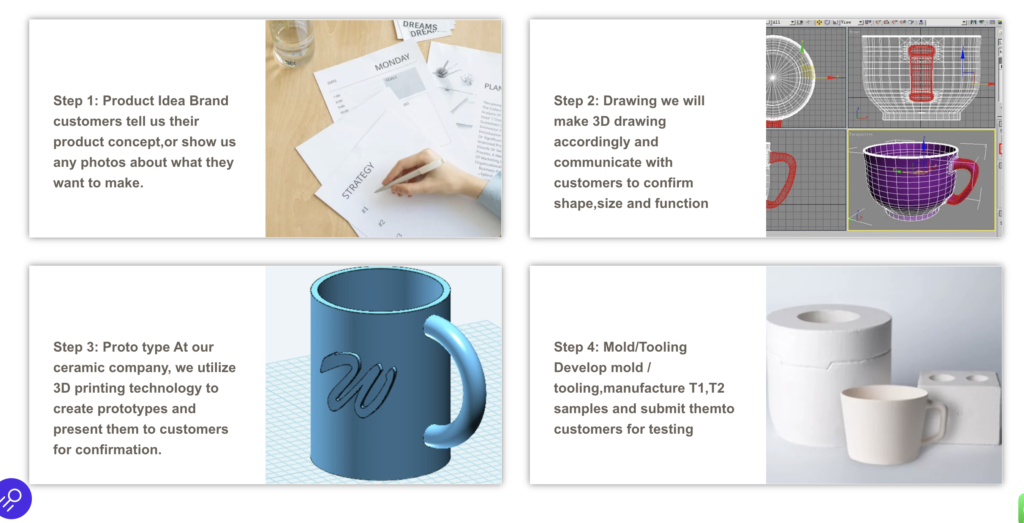
But the sourcing process should be structured.
Step 1: Create a technical product brief
Prepare one document containing:
- Product photos or sketches
- Dimensions
- Material requirement
- Glaze requirement
- Color reference
- Logo requirements
- Packaging
- Estimated annual volume
- Target market
- Testing requirements
This allows different factories to quote against the same specifications.
Step 2: Request samples
Never approve a large rustic ceramic plate order from photos alone.
Request physical samples.
A photo cannot tell you:
- How heavy the plate feels
- Whether the rim is comfortable
- How the glaze looks under restaurant lighting
- Whether the plate stacks properly
- Whether the surface scratches easily
- How consistent the glaze is
- Whether the base is stable
For rustic products, physical samples are particularly important because surface texture is part of the product.
Step 3: Test samples like a restaurant
Do not simply put food on the plate once.
Try to simulate actual restaurant conditions.
Stack them.
Wash them repeatedly.
Handle them quickly.
Put them through your normal dishwasher process.
Check the glaze after repeated use.
Use cutlery.
Check for metal marking.
Test the packaging.
If the restaurant group is large, it is also wise to conduct a small pilot program in one or two locations before rolling out the tableware to every branch.
Step 4: Lock a golden sample
Once the plate is approved, keep a signed or documented master sample.
The sample should establish:
- Shape
- Size
- Weight
- Glaze color
- Surface finish
- Logo position
- Logo size
- Packaging standard
This becomes the reference for future production.
Step 5: Discuss repeat orders before the first purchase
This step is often forgotten.
Ask the factory:
“Can you reproduce this exact plate twelve months from now?”
A restaurant chain does not only buy the initial shipment.
Plates break.
New locations open.
Menus change.
Additional quantities are required.
Therefore, the factory’s ability to support long-term replenishment is a critical part of the purchasing decision.
Common Rustic Plate Styles for Restaurant Chains
Different restaurant concepts require different rustic finishes.
Speckled Beige Plates
A warm beige base with small brown or darker speckles is one of the easiest rustic looks to commercialize.
It works well with:
- Brunch
- Bakery
- Café
- Farmhouse
- Mediterranean
- Casual dining
The neutral background also works well for food photography.
Reactive Glaze Plates
Reactive glazes can create more dramatic variations.
They are suitable for restaurant brands that want a stronger handcrafted appearance.
However, buyers should establish acceptable variation limits before production.
Two-Tone Rustic Plates
A glazed center with a darker rim or exposed ceramic edge can create a more premium look.
This style works especially well for modern restaurants that want rustic inspiration without looking old-fashioned.
Organic Rim Plates
Instead of perfectly circular edges, the rim can have subtle handcrafted irregularity.
The key word is subtle.
Too much irregularity can affect stacking, portion presentation, and replacement consistency.
Earth-Tone Ceramic Plates
Brown, olive, clay, sand, cream, charcoal, and muted blue are common directions for natural restaurant interiors.
These colors can work particularly well when paired with wood tables, linen napkins, stone countertops, and natural décor.
What Should Be Included in a Restaurant Plate RFQ?
If you are contacting manufacturers, your RFQ should be more detailed than:
A stronger RFQ might include:
Product: Rustic finish restaurant dinner plate
Material: Earthenware / stoneware, depending on final specification
Size: 10.5–11 inches
Finish: Semi-matte rustic glaze
Color: Warm beige with subtle brown speckles
Shape: Organic round
Use: Restaurant chain / commercial foodservice
Logo: Custom logo on back or underside
Testing: Food-contact compliance required
Packaging: Export carton with protective separators
Order: Sample + bulk production
Target market: USA / EU / UK / Australia
Estimated annual quantity: XX,XXX pieces
Repeat orders: Required
This immediately helps a factory understand that you are a serious commercial buyer rather than a consumer looking for a few dinner plates.
Common Mistakes When Buying Rustic Earthenware Plates Wholesale
Choosing appearance over performance
A beautiful plate that chips quickly is expensive.
Comparing factories only by unit price
The cheapest quotation may exclude testing, better packaging, custom molds, inspection, or replacement support.
Not requesting a production sample
The final bulk glaze can look different from a computer rendering.
Ignoring replacement availability
Restaurant chains need a reliable replenishment system.
Not defining acceptable glaze variation
Rustic should look intentionally varied, not uncontrolled.
Forgetting packaging
Ceramic plates are fragile products.
A good factory should be able to discuss carton design, separators, inner protection, palletization, loading, and export handling.
Treating all “ceramic” plates as the same
Earthenware, stoneware, porcelain, and vitrified ceramic can behave differently.
Always confirm the actual material and technical specifications.
Frequently Asked Questions About Rustic Finish Earthenware Plates
Are rustic earthenware plates suitable for restaurant chains?
They can be, but suitability depends on the ceramic body, glaze, firing, thickness, and intended operating conditions.
For high-volume restaurants, buyers should conduct commercial-use testing rather than choosing based on appearance alone.
What is the difference between rustic earthenware and rustic stoneware?
The biggest difference is not the rustic appearance but the ceramic body and technical properties.
Earthenware generally has a more traditional pottery character, while stoneware is typically denser and fired at higher temperatures.
If your restaurant requires heavy-duty daily use, ask the manufacturer whether stoneware or another commercial ceramic body would be more appropriate.
Can rustic ceramic plates be customized with a restaurant logo?
Yes. Depending on the manufacturer and decoration process, logos can potentially be applied through decals, printing, embossing, engraving, or other ceramic decoration methods.
The exact method should be tested on the final glaze before bulk production.
Can I order custom rustic ceramic plates from China?
Yes.
China has a large ceramic manufacturing ecosystem capable of supporting custom shapes, glaze colors, logos, packaging, and private-label projects.
The important thing is to work with a factory that can control the complete process rather than simply trading finished products.
What MOQ should I expect for custom rustic dinner plates?
There is no universal MOQ.
It depends on whether you need an existing mold or a new mold, whether the glaze is standard or custom, the decoration method, production line, and factory capacity.
For a restaurant chain, it is better to ask for pricing at several quantities, such as 1,000, 5,000, 10,000, and 50,000 pieces.
This makes the cost structure much easier to understand.
How do I make sure rustic glaze variations are controlled?
Ask the manufacturer to create an approved golden sample and define acceptable variation.
You can also request production photos, pre-shipment inspection, and sample retention from each batch.
Remember: rustic design should have controlled variation, not uncontrolled quality.
Are rustic finish plates dishwasher safe?
Some are, but you should never assume it.
Ask the manufacturer specifically about dishwasher use and whether the claim applies to commercial dishwashing conditions.
Are rustic ceramic plates microwave safe?
Some are microwave safe, while others may not be suitable depending on the glaze, decoration, metallic elements, and ceramic body.
Confirm this with the manufacturer and test the final production specification.
What is the best glaze color for a rustic restaurant plate?
There is no single best color.
Warm beige, cream, olive, brown, charcoal, muted blue, and terracotta-inspired tones are all useful starting points.
The best option depends on your food presentation, restaurant interior, logo colors, and overall brand identity.
Final Thoughts: The Best Rustic Plate Is the One That Fits Your Restaurant Operation
Rustic finish earthenware plates can give a restaurant chain something that ordinary tableware often struggles to provide: personality.
The subtle variation of a glaze, the warmth of an earthy color, the organic curve of a rim, and the tactile feeling of ceramic can make a restaurant feel more authentic.
But for professional buyers, aesthetics are only one part of the equation.
The real question is:
Can the manufacturer reproduce that beautiful rustic look consistently at commercial volume while keeping the plates safe, durable, stackable, packable, and available for future replenishment?
That is the standard restaurant chains should use.
If you are sourcing custom rustic ceramic plates, wholesale earthenware dinner plates, speckled ceramic restaurant plates, handmade-look dinnerware, or private-label ceramic tableware, compare factories based on the complete supply chain—not just the sample photo or initial quotation.
For global kitchenware brands, restaurant groups, hospitality suppliers, gift companies, and cross-border e-commerce sellers, EKA provides OEM and ODM ceramic tableware manufacturing from China.
From custom shapes and rustic glaze development to logo decoration, packaging, sample development, bulk production, and export-ready orders, the goal is not simply to manufacture another ceramic plate.
It is to help you turn a tableware concept into a product that can be repeated, scaled, and used as part of your brand for years.
Looking for a custom rustic ceramic plate manufacturer for your next restaurant or retail project? Start with your design, target quantity, preferred finish, and market requirements—and build the specification from there.
Related Search Topics
- Rustic finish earthenware plates manufacturer
- Rustic ceramic plates for restaurant chains
- Wholesale rustic dinner plates
- Custom earthenware plates manufacturer
- Custom ceramic plates for restaurants
- Speckled ceramic dinner plates wholesale
- Rustic restaurant dinnerware supplier
- OEM ceramic dinnerware manufacturer China
- ODM restaurant tableware manufacturer
- Private label ceramic plates
- Commercial rustic dinnerware
- Custom glaze ceramic plates
- Handmade-look restaurant plates
- Wholesale ceramic dinnerware for restaurants
- Restaurant chain tableware sourcing