Walk into a restaurant in Dubai, Doha, Riyadh, Abu Dhabi, or Kuwait City, and you may notice something interesting.
The food can be completely different—from traditional Middle Eastern dishes and grilled meats to sushi, pasta, or modern fusion cuisine—but the tableware often shares one visual language: clean white porcelain paired with deep blue decoration.
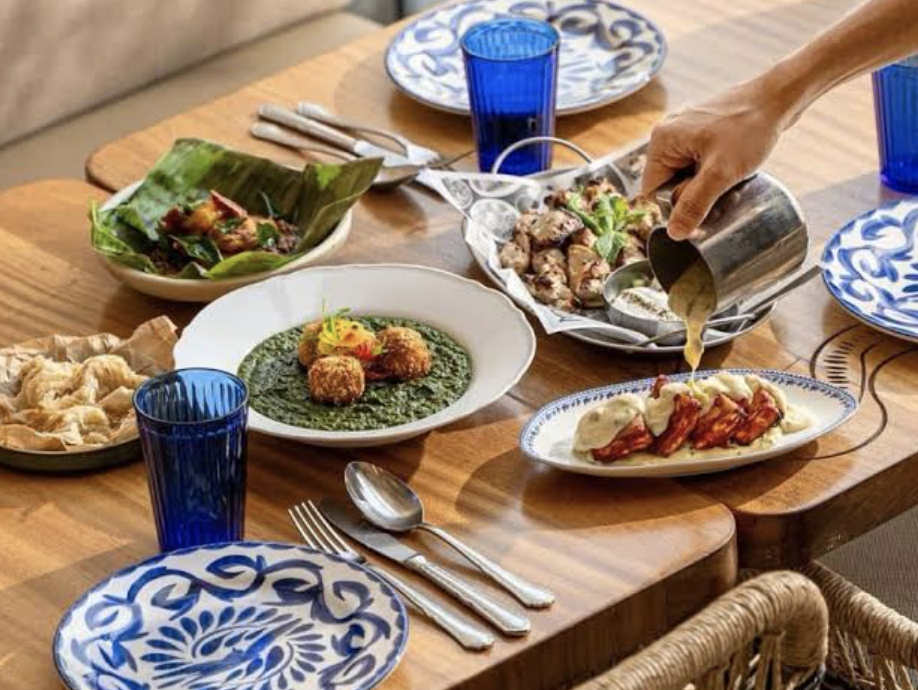
This is not simply a matter of coincidence.
Underglaze blue porcelain plates have become an especially attractive choice for restaurants, hotels, catering businesses, retailers, and hospitality projects across the Middle East. Their appeal comes from a combination of cultural familiarity, visual elegance, practical durability, and strong compatibility with both traditional and contemporary dining concepts.
For overseas buyers, however, the real question is not just, “Are blue and white plates popular?”
The more useful question is:
Why does underglaze blue porcelain work so well in Middle Eastern markets, and what should buyers look for when sourcing these plates from a manufacturer?
This guide explores the reasons behind the trend, the styles that are performing well, and the factors procurement teams should consider before placing a bulk order.
What Makes Underglaze Blue Porcelain Plates Different?
Before discussing the Middle Eastern market, it helps to understand what “underglaze blue” actually means.
In simple terms, underglaze decoration is applied to the ceramic body before the transparent glaze is added and the plate is fired.
The blue pattern becomes protected beneath the glaze rather than sitting directly on the surface.
This creates several practical advantages.
First, the decoration generally has a smooth finish because it is covered by glaze. Second, the pattern is less exposed to direct abrasion from washing and everyday handling. Third, the finished plate can have a clean, integrated appearance rather than looking as though a graphic has simply been printed onto the surface.
For restaurants and hospitality buyers, this distinction matters.
A plate may look beautiful when it arrives at a warehouse, but commercial tableware has to survive repeated washing, stacking, handling, transportation, and daily service.
That is why durable underglaze blue porcelain dinnerware is often considered when buyers want decorative tableware without giving up the functional benefits expected from professional foodservice products.
Why Are Blue and White Porcelain Plates So Popular in the Middle East?
There is no single reason.
The popularity of underglaze blue porcelain in Middle Eastern markets is better understood as the result of several overlapping factors.
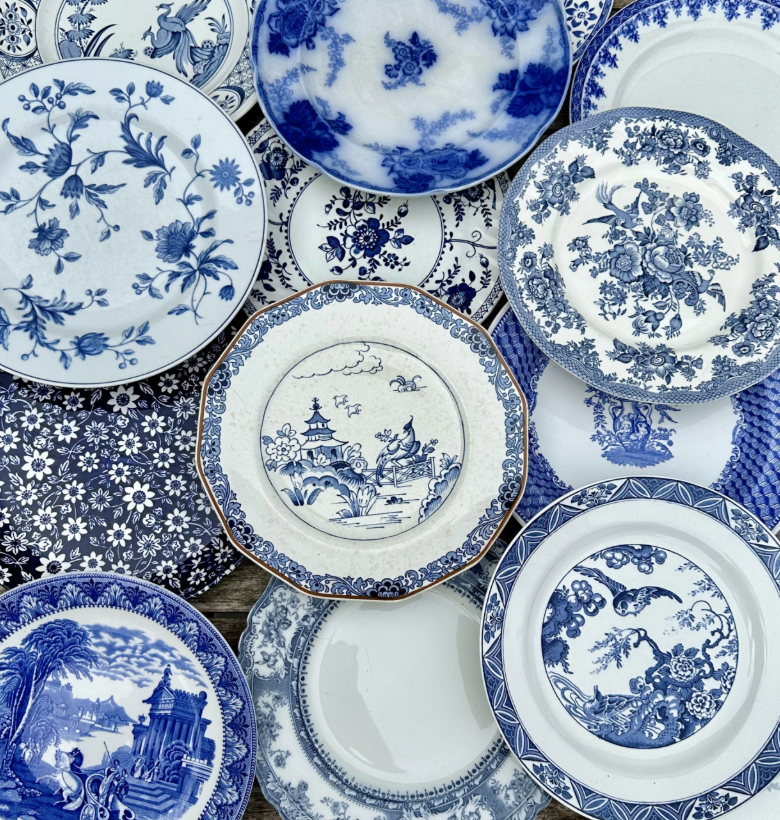
1. Blue and white create a sense of timeless elegance
Blue and white is one of the easiest ceramic color combinations to recognize.
White provides a clean visual background, while blue adds contrast and personality. The result feels decorative without becoming excessively colorful.
This is particularly useful in hospitality environments.
A hotel restaurant may want its tableware to look premium, but it also needs plates that work with many different foods, table linens, furniture styles, and interior finishes.
Blue-and-white porcelain provides that flexibility.
A deep cobalt border can create a more luxurious impression. A delicate botanical pattern can feel traditional. A geometric motif can look modern. A hand-painted effect can make the collection feel artisanal.
The basic color combination stays the same, but the design language can change dramatically.
2. The visual language works well with Middle Eastern hospitality
Hospitality is an important part of dining culture across the Middle East.
Restaurants and hotels frequently pay close attention to presentation because the dining experience is about much more than simply serving food.
Tableware becomes part of that experience.
A beautifully decorated plate can frame rice dishes, grilled meats, mezze, desserts, seafood, and contemporary plated cuisine without competing too aggressively with the food.
This is one reason blue and white porcelain plates for Middle Eastern restaurants can be a practical design choice.
They provide a recognizable decorative identity while leaving enough visual space for the food itself.
3. Blue works with both traditional and modern interiors
One major advantage of blue is its adaptability.
Imagine a restaurant with warm wood furniture, brass details, textured walls, and traditional architectural elements.
A cobalt blue porcelain plate can fit naturally into that environment.
Now imagine a minimalist hotel restaurant with marble countertops, neutral upholstery, and contemporary lighting.
The same basic blue-and-white palette can still work.
This flexibility makes blue porcelain particularly interesting to buyers managing multiple locations or restaurant concepts.
Instead of choosing a highly specific color that may become outdated, buyers can use a classic blue-and-white foundation and update the pattern or shape around it.
Underglaze Blue vs. Other Decorative Porcelain Plates
For procurement teams, appearance is only one part of the decision.
The decoration method, expected usage, design flexibility, and maintenance requirements all affect whether a product makes sense for commercial use.
| Feature | Underglaze Blue Porcelain | Overglaze Decoration | Plain White Porcelain | Reactive / Artistic Glaze |
|---|---|---|---|---|
| Visual character | Classic, refined, decorative | Rich and highly detailed | Minimal and versatile | Unique and artisanal |
| Decoration position | Beneath transparent glaze | On top of glaze | No decoration | Mainly created by glaze effects |
| Commercial suitability | Very strong for many foodservice applications | Depends on decoration and firing process | Excellent | Depends on design and production consistency |
| Pattern consistency | High when properly manufactured | High, but surface decoration can require additional care | Very high | Can naturally vary |
| Branding potential | Excellent | Excellent | Excellent with logos or shapes | Strong for boutique concepts |
| Suitable market positioning | Mid-range to premium | Premium / decorative | Mass-market to premium | Boutique / lifestyle |
| Design direction | Traditional, geometric, floral, contemporary | Detailed and decorative | Minimalist | Handmade-inspired / organic |
The important takeaway is that there is no universally “best” decoration method.
The right choice depends on how the plates will be used.
For high-volume restaurant chains, consistency and durability may be more important than elaborate surface decoration. For boutique hotels, visual uniqueness may have greater value.
That is where underglaze decoration becomes particularly interesting: it offers a balance between decorative appeal and practical usability.
What Styles of Underglaze Blue Porcelain Plates Work Best?
Not every blue-and-white plate has the same commercial potential.
For buyers sourcing for the Middle East, several design directions are worth considering.
Classic Cobalt Blue Borders
A white porcelain plate with a cobalt blue rim is one of the safest choices for a restaurant or hotel collection.
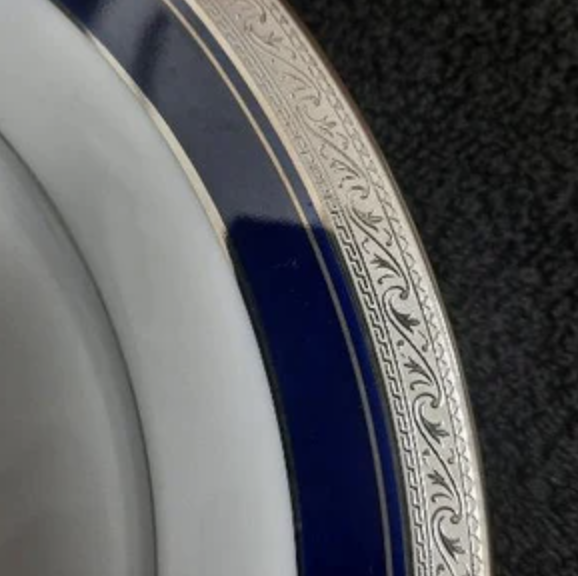
It looks clean, photographs well, and does not overwhelm the food.
This style is particularly suitable for buyers searching for cobalt blue porcelain plates for hotel restaurants or classic blue-and-white dinnerware for hospitality projects.
The border can be thin and understated or wider and more decorative.
Geometric Blue Patterns
Geometric patterns can connect traditional visual influences with contemporary interiors.
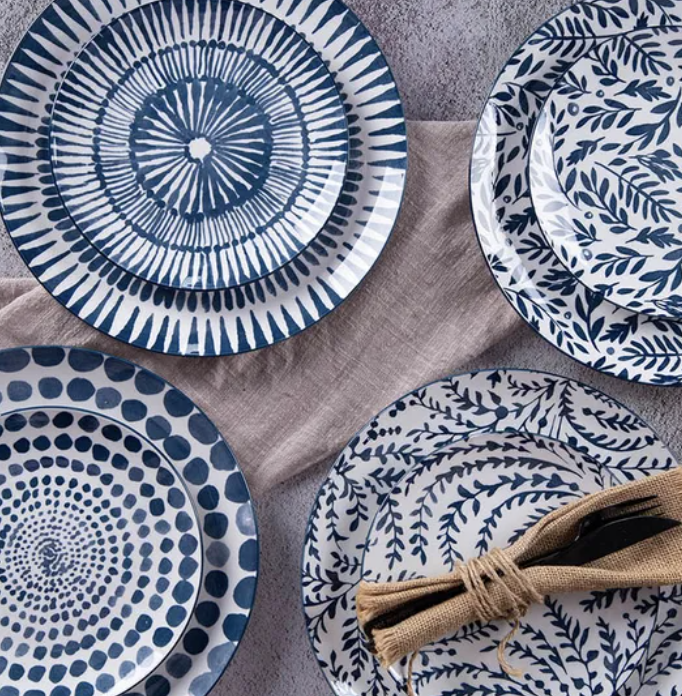
Repeated lines, diamonds, arches, stars, and symmetrical motifs can create a strong identity without making the plate look old-fashioned.
This can be especially effective for Middle Eastern restaurants that want tableware inspired by regional aesthetics but designed for modern dining environments.
Botanical and Floral Patterns
Floral motifs are another versatile direction.
Instead of using overly complicated patterns, many buyers prefer simplified botanical elements around the rim or in selected areas of the plate.
This allows the food to remain the focal point.
Blue Brushstroke Effects
For restaurants targeting younger customers or a more relaxed dining experience, imperfect-looking brushstroke designs can make porcelain feel less formal.
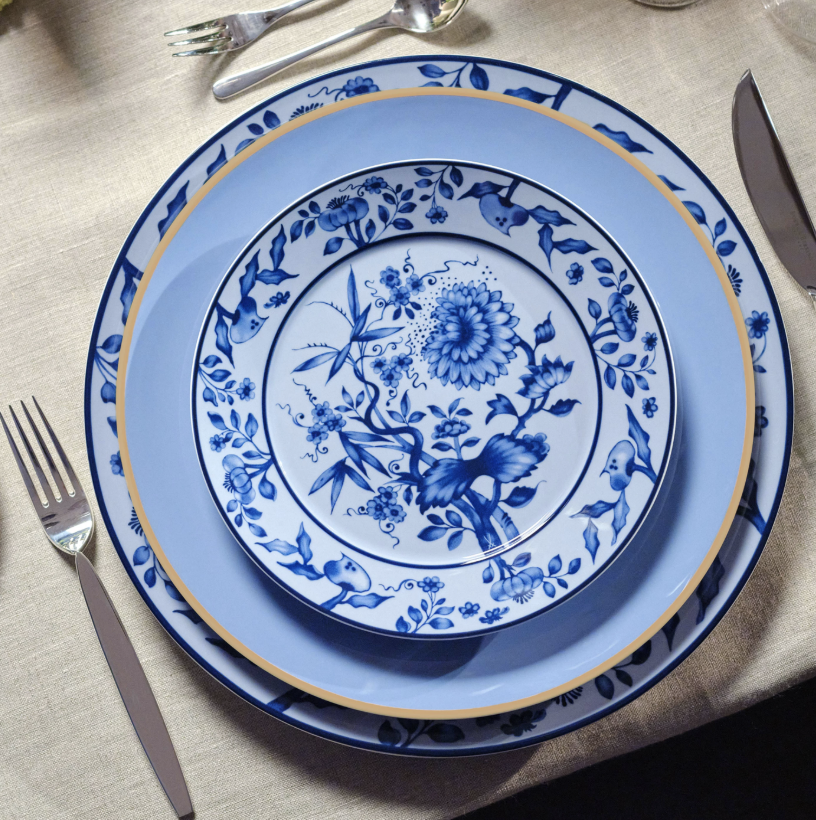
The key is controlled irregularity.
The plate should look handcrafted while maintaining enough production consistency for commercial ordering.
Custom Logo and Private-Label Designs
For restaurant groups and hospitality brands, customization can be even more valuable than choosing an existing pattern.
A manufacturer can potentially adapt the border, logo placement, motif, plate shape, color intensity, and packaging according to the buyer’s requirements.
This is where custom underglaze blue porcelain plates for restaurant chains can become a branding tool rather than simply a piece of tableware.
5 Well-Known Brands Buyers Can Study for Blue-and-White Tableware Inspiration
If you are researching the market before developing your own collection, established tableware brands can provide useful design references.
The goal is not necessarily to copy them.
Instead, look at how established brands use shape, color, pattern density, and storytelling to create recognizable collections.
Royal Copenhagen
Royal Copenhagen is widely associated with blue-and-white porcelain and highly recognizable hand-painted decorative traditions.
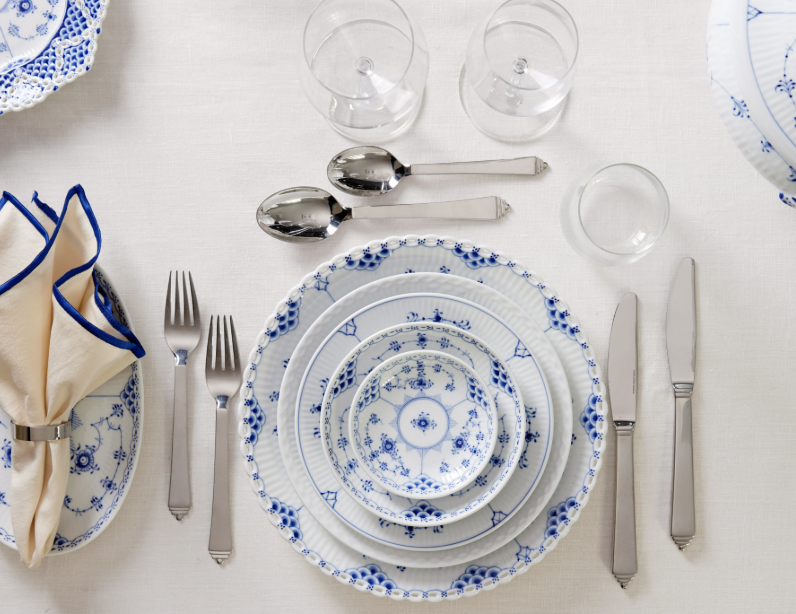
Its Blue Fluted universe demonstrates how a consistent blue motif can become a strong visual signature.
For buyers, one useful lesson is the power of repetition: a recognizable pattern can help a complete dinnerware collection feel cohesive.
Noritake
Noritake has a long history in porcelain tableware and offers collections ranging from classic to contemporary styles.
Its approach demonstrates how blue decoration can be combined with refined forms rather than being restricted to traditional motifs.
For a hotel or restaurant buyer, this is a useful reminder that “blue and white” does not have to mean old-fashioned.
Villeroy & Boch
Villeroy & Boch is another established name worth studying when researching premium ceramic tableware.
Its collections show how traditional decorative references can be adapted into modern dining environments.
The broader lesson for OEM buyers is important: classic visual elements can remain commercially relevant when the shape, proportions, and overall styling are updated.
Wedgwood
Wedgwood is well known for its strong design heritage and refined approach to decorative tableware.
Its blue-focused collections demonstrate how blue can communicate sophistication without relying on bright or complicated colors.
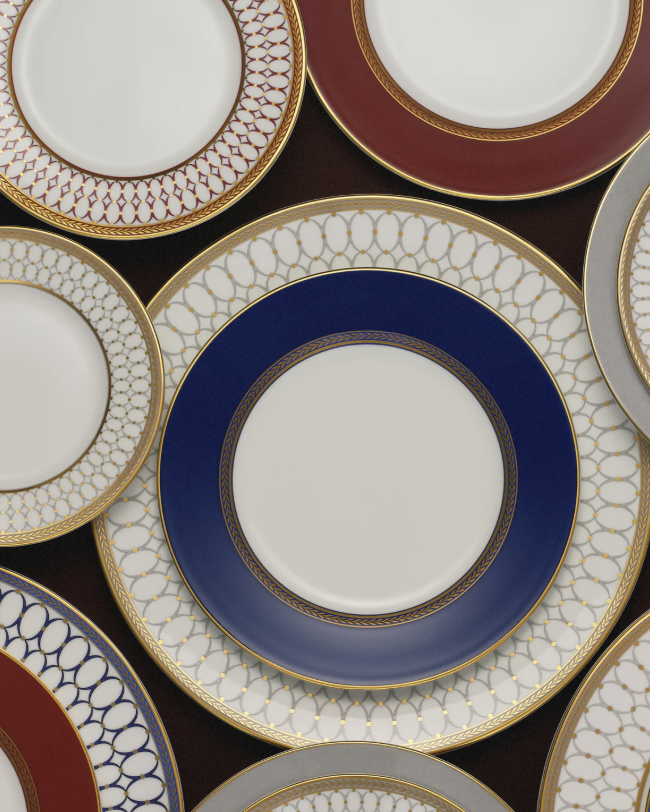
For buyers developing premium blue porcelain dinnerware for hotels, this type of restrained elegance can be a useful design reference.
Churchill China
Churchill China is particularly relevant from a commercial foodservice perspective.
Its product development shows the importance of balancing appearance with the realities of professional dining environments.
For procurement teams, that is a valuable distinction.
A beautiful plate is not necessarily a good restaurant plate. Commercial tableware must also consider durability, stacking, handling, cleaning, replacement, and consistency.
Why Middle Eastern Restaurant Buyers Care About More Than Appearance
It is easy to focus on color when discussing blue porcelain.
But professional buyers usually think much further ahead.
Imagine ordering 5,000 plates for a restaurant chain.
The purchasing department needs to think about:
- Will the plates arrive consistently in color?
- Are dimensions stable from batch to batch?
- Can the manufacturer reproduce the pattern accurately?
- Will replacement orders match the original collection?
- Are the plates designed for repeated restaurant use?
- Can the factory provide suitable packaging for export?
- Can the design be customized?
- What is the minimum order quantity?
- How long does production take?
- Can the supplier maintain quality across large-volume orders?
These questions often matter more than whether a plate looks attractive in a product photograph.
What Should Buyers Check When Sourcing Underglaze Blue Porcelain Plates?
1. Decoration consistency
Blue decoration can vary noticeably if the production process is not carefully controlled.
For a restaurant chain, small differences between batches can become a major problem.
Ask the supplier about color control, sample approval, artwork confirmation, and production inspection.
2. Porcelain body quality
A decorative pattern cannot compensate for a weak ceramic body.
Buyers should assess the porcelain’s strength, firing quality, flatness, glaze surface, edge finishing, and overall consistency.
For commercial use, these details are especially important because plates may be handled dozens of times during their service life.
3. Plate shape and stacking
This is easy to overlook.
A plate may look excellent individually but become inconvenient when stored.
Restaurant operators need to think about kitchen shelves, dishwashing areas, storage rooms, transportation, and table setting.
A well-designed stackable blue porcelain plate for restaurant use can therefore provide value beyond its appearance.
4. Food-contact and testing requirements
International buyers should also make sure the products meet the regulations and testing requirements relevant to their destination market.
Depending on the market and product specification, this may involve checking requirements related to food-contact safety, heavy metals, glaze performance, and other applicable standards.
Do not assume that a supplier’s “export quality” statement automatically means the same thing as compliance with your specific destination requirements.
5. Packaging for international shipping
Porcelain is fragile.
A good product can still become an expensive problem if packaging is inadequate.
For international orders, buyers should evaluate inner protection, carton strength, stacking arrangement, palletization, and drop or transport risks.
This is particularly important when sourcing bulk blue porcelain dinnerware from China for long-distance shipment.
How Can Restaurants Use Blue Porcelain to Strengthen Their Brand?
A restaurant does not need to put a giant logo in the center of every plate to create branding.
Sometimes subtle design works better.
Use a recognizable border
A custom blue border can become a visual signature.
Customers may not consciously identify the design, but they can associate it with the restaurant’s overall dining experience.
Match the blue to the interior
The shade of blue matters.
Deep cobalt can feel traditional and premium.
Soft blue can feel lighter and more contemporary.
Navy can create a more sophisticated restaurant atmosphere.
The right choice should be based on the restaurant’s furniture, lighting, packaging, uniforms, menus, and overall brand identity.
Create a complete tableware collection
Instead of ordering only dinner plates, buyers can consider creating a coordinated series.
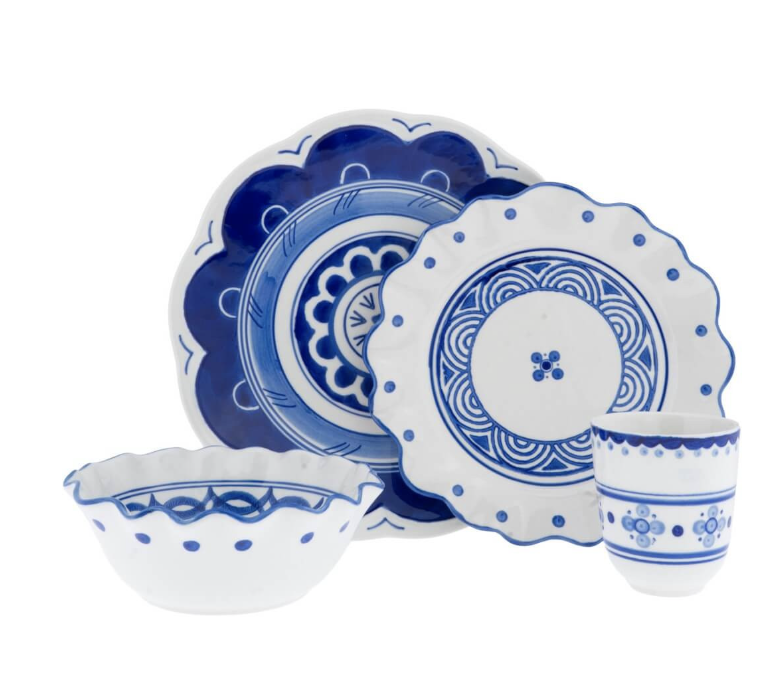
For example:
- Dinner plates
- Side plates
- Pasta bowls
- Soup bowls
- Serving platters
- Dessert plates
- Rice bowls
- Small dipping dishes
A consistent blue motif across multiple shapes can make the table setting feel professionally designed.
This is especially useful for restaurant groups that want a consistent experience across multiple locations.
Why OEM and ODM Matter for Middle Eastern Buyers
One of the biggest advantages of working directly with a manufacturer is the ability to move beyond catalog products.
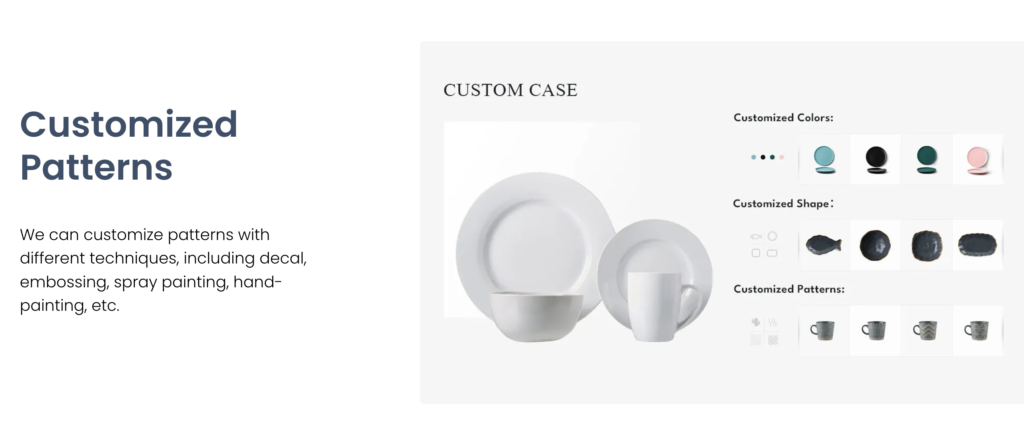
An importer may find a blue-and-white plate that looks good, but what happens if the restaurant wants a slightly different shade of blue?
Or a wider rim?
Or a custom Arabic-inspired geometric motif?
Or a logo on the back?
Or a new plate diameter?
That is where OEM and ODM become valuable.
OEM: Build Around Your Existing Design
OEM is suitable when the buyer already has:
- Artwork
- Logo
- Product dimensions
- Color references
- Packaging requirements
- Existing tableware specifications
The factory’s role is to manufacture according to the buyer’s approved requirements.
ODM: Start With a Product Concept
ODM can be more useful when the buyer has a general idea but needs help developing the actual product.
For example:
“We want a modern blue-and-white porcelain collection inspired by Middle Eastern geometric architecture, but we don’t want it to look overly traditional.”
That is not a finished technical specification.
It is a product concept.
An experienced ceramic manufacturer can help turn that concept into shapes, patterns, samples, and production-ready specifications.
For buyers looking for OEM and ODM porcelain dinnerware manufacturers in China, this development capability can be a major advantage.
How to Choose the Right Blue Porcelain Plate for Your Market
A useful way to approach sourcing is to start with the intended customer rather than the plate.
If you are buying for a luxury hotel, the design may need a more refined and sophisticated appearance.
If you are buying for a casual restaurant chain, durability, stackability, replacement availability, and cost control may be more important.
If you are an e-commerce seller, packaging, product photography, visual differentiation, and retail-friendly sizes may carry more weight.
If you are a gift company, storytelling and decorative details may become the primary selling points.
In other words:
The best blue porcelain plate is not necessarily the most beautiful one. It is the one that matches the business model.
Common Mistakes When Importing Blue-and-White Porcelain Tableware
Choosing based only on photos
Product photos cannot show everything.
They cannot tell you how the plate feels in the hand, how consistent the glaze is, how it stacks, or how accurately the blue pattern is reproduced.
Always request samples before committing to a large production order.
Ignoring replacement orders
Restaurant chains may need additional plates months or even years after the original purchase.
If the design is difficult to reproduce, future replacement orders can become complicated.
Ask the manufacturer whether artwork, molds, color references, and production specifications can be retained for future orders.
Making the pattern too complicated
More decoration does not always mean more value.
If the plate is covered with dense blue graphics, the food may lose visual impact.
For restaurants, a balanced pattern is often more commercially useful.
Forgetting about MOQ and lead time
Custom porcelain products require planning.
Artwork approval, sampling, mold development, production, inspection, packaging, and shipping all take time.
Buyers should build sufficient lead time into their purchasing plans rather than treating custom tableware like an off-the-shelf commodity.
A Practical Sourcing Checklist for Middle Eastern Buyers
Before placing a bulk order, ask the supplier for the following:
- Product specifications and dimensions
- Porcelain body and firing information
- Decoration method
- Blue color reference or approved sample
- Artwork confirmation process
- Food-contact safety documentation where applicable
- Sample availability
- MOQ for standard and custom products
- OEM/ODM development capabilities
- Production lead time
- Quality inspection process
- Export packaging specifications
- Replacement-order support
- Shipping and palletization options
This checklist may look simple, but it can save buyers from many expensive surprises later.
FAQ: Underglaze Blue Porcelain Plates for Middle Eastern Markets
Why are blue and white porcelain plates popular in the Middle East?
Their popularity comes from several factors, including the timeless appearance of blue and white, compatibility with many food styles, strong decorative appeal, and the ability to fit both traditional and contemporary hospitality interiors.
They also offer a useful balance between visual identity and practicality.
Are underglaze blue porcelain plates suitable for restaurants?
They can be highly suitable for restaurant use when the porcelain body, glaze, decoration, firing, and quality control are designed for the intended application.
However, buyers should always confirm the manufacturer’s specifications and testing documentation rather than assuming every decorative porcelain plate is suitable for commercial foodservice.
Are underglaze decorations more durable than surface decoration?
Because underglaze decoration is covered by a transparent glaze, it is protected from direct surface contact.
However, actual durability depends on the ceramic body, glaze formulation, firing conditions, decoration quality, and manufacturing process.
The decoration method alone should not be treated as a guarantee of durability.
Can blue porcelain plates be customized with a restaurant logo?
Yes. Depending on the manufacturer’s capabilities and the design, buyers may be able to customize logos, patterns, borders, shapes, sizes, colors, and packaging.
For restaurant chains, it is often better to discuss the complete collection rather than customizing only one plate.
Can I order custom underglaze blue porcelain plates from China?
Yes. Chinese ceramic manufacturers can provide OEM and ODM solutions for overseas buyers.
For a custom project, buyers should prepare or discuss the desired dimensions, artwork, color, quantity, packaging, testing requirements, and delivery schedule.
What MOQ is typical for custom porcelain plates?
There is no universal MOQ.
It can vary according to the factory, product size, decoration complexity, mold requirements, packaging, and order quantity.
For customized designs, buyers should ask for a quotation based on their actual specifications rather than relying on a generic MOQ found online.
What blue designs are best for Middle Eastern restaurants?
Cobalt blue borders, geometric patterns, floral motifs, contemporary brushstroke effects, and subtle regional-inspired patterns can all work well.
The best design depends on the restaurant’s positioning, cuisine, interior style, and target customers.
What should I ask a porcelain manufacturer before ordering?
Ask about sample approval, color consistency, product dimensions, production lead time, MOQ, quality inspection, food-contact requirements, packaging, replacement orders, and OEM/ODM capabilities.
For large restaurant projects, it is also wise to discuss how the factory will maintain consistency between the initial order and future production batches.
Final Thoughts: Blue Porcelain Is More Than a Trend
The success of underglaze blue porcelain plates in Middle Eastern markets is not simply about a popular color combination.
It is about fit.
Blue and white fits a wide range of restaurant concepts.
Porcelain fits the expectations of many hospitality environments.
Underglaze decoration provides a way to introduce pattern and identity while keeping the surface visually clean.
And OEM/ODM production gives brands the opportunity to turn a familiar design language into something uniquely their own.
For overseas buyers, the opportunity is particularly interesting because the same core product can serve very different business models—from hotel dining rooms and restaurant chains to specialty retailers, gift companies, and cross-border e-commerce stores.
The key is to stop thinking of the plate as a standalone product.
Think about the entire experience: the food, the restaurant interior, the brand identity, the table setting, the washing process, the storage space, the shipping journey, and the customer’s final impression.
That is when blue porcelain tableware starts to make real commercial sense.
For global kitchenware brands, hospitality groups, gift businesses, and e-commerce sellers looking for a reliable porcelain tableware OEM and ODM manufacturer in China, EKA provides customized ceramic dinnerware manufacturing solutions, helping buyers develop products from initial design concepts through sampling and bulk production.
If your next project involves custom underglaze blue porcelain plates, blue-and-white restaurant dinnerware, or private-label porcelain tableware, choosing the right manufacturing partner at the beginning can make the entire sourcing process much easier.