Walk into a well-designed homeware store and you will notice something interesting: customers rarely pick up a plate simply because they need a plate.
They touch it. Turn it over. Look at how the glaze catches the light. Compare its color with another piece. Sometimes, they even imagine how it would look on their dining table before they check the price.
That small moment is where tableware becomes branding.
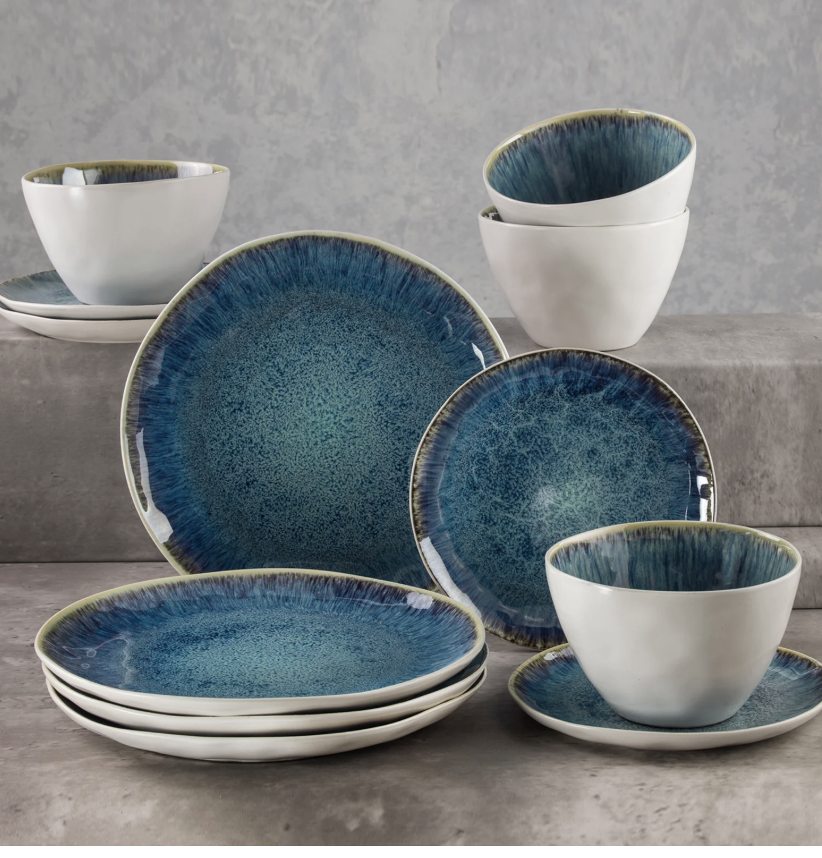
For retailers, restaurant groups, kitchenware distributors, gift companies, and e-commerce sellers, this is why layered glaze stoneware tableware has become an increasingly attractive product category. Unlike plain ceramic dinnerware, layered glaze creates subtle depth, variation, and visual character that can make an otherwise familiar plate or bowl feel more distinctive.
And that distinction matters.
A retailer may be competing with hundreds of similar products online. A homeware brand may have only a few seconds to capture attention on a store shelf. A restaurant chain may want its table setting to look memorable without making the table feel over-designed.
Layered glaze stoneware can help solve all three problems.
But the real question is not simply whether layered glaze looks beautiful. The better question is:
How can layered glaze stoneware tableware actually strengthen a retail brand and create more commercial value?
In this guide, we will explore how layered glaze works, why consumers respond to it, where retailers can use it, what buyers should check before placing an order, and how OEM and ODM customization can turn a ceramic product into a recognizable brand asset.
What Is Layered Glaze Stoneware Tableware?
Layered glaze stoneware refers to stoneware tableware finished with two or more glaze effects, glaze applications, or visual layers that interact during firing.
Instead of producing a completely uniform surface, layered glazing can create:
- Color depth
- Tonal transitions
- Subtle pooling around the rim
- Reactive-looking variations
- Contrasting inner and outer surfaces
- Glossy and matte combinations
- Speckled or textured visual effects
- Darker edges with lighter centers
- Natural-looking color movement
The final result depends on factors such as the glaze formulation, application method, thickness, firing temperature, clay body, shape of the item, and kiln atmosphere.
This is one reason layered glaze stoneware is appealing for retail products.
The surface does not always look mechanically identical from one piece to another. When controlled properly, those small variations can make the collection feel more handcrafted and premium.
For a retailer, that can translate into something much more valuable than decoration:
visual identity.
Why Does Layered Glaze Matter for Retail Branding?
A retail brand is not built only through a logo, packaging, or advertising campaign.
It is also built through repeated sensory experiences.
When customers repeatedly see a certain color palette, surface finish, silhouette, and material quality associated with a particular retailer, they begin to recognize the brand’s visual language.
This is where layered glaze can become particularly useful.
A retailer selling standard white plates may have difficulty making its collection visually distinctive. Another retailer using a carefully developed combination of warm ivory, smoky blue, earthy brown, and darker rim accents may create a recognizable aesthetic across plates, bowls, mugs, and serving pieces.
The glaze becomes part of the brand.
Layered Glaze Creates a More Recognizable Shelf Presence
Imagine two dinnerware collections sitting next to each other.
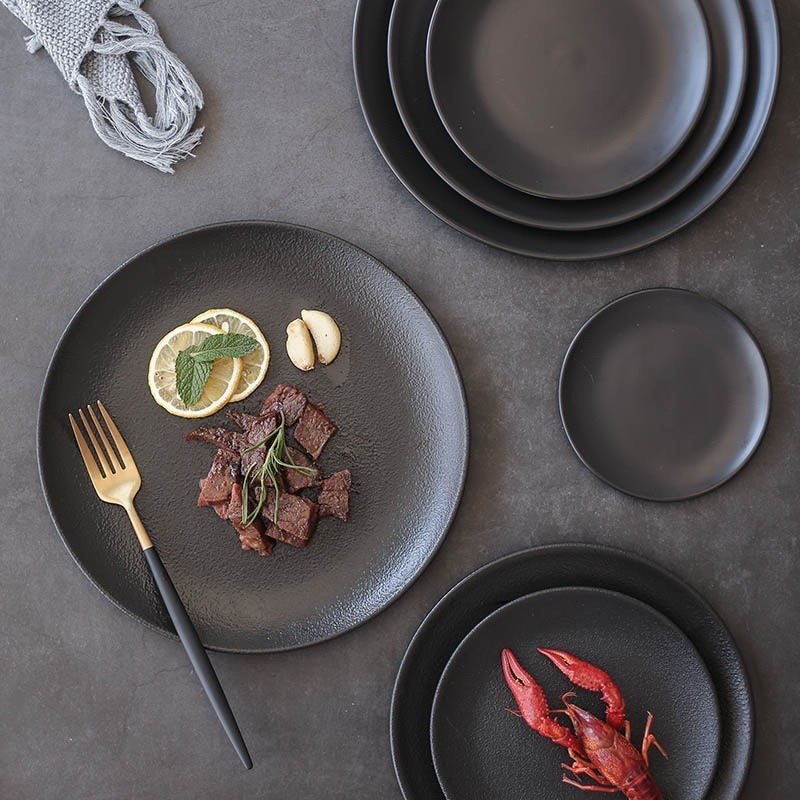
One consists of perfectly flat, uniform colors.
The other has subtle tonal movement, a darker edge, and a soft transition toward the center of each plate.

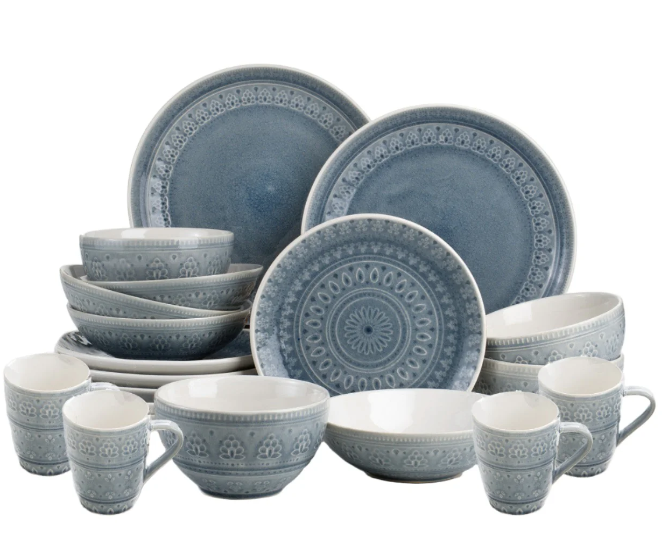
Even before a customer reads the packaging, the second collection may feel more expressive.
That visual difference can be especially important for:
- Home décor retailers
- Lifestyle stores
- Kitchenware brands
- Boutique gift shops
- Restaurant supply distributors
- Hospitality brands
- Online tableware stores
- Private-label e-commerce sellers
A distinctive glaze can help a product stand out without relying on complicated patterns or printed graphics.
7 Ways Layered Glaze Stoneware Boosts Retail Branding
1. It Gives a Collection Its Own Visual Language
One of the biggest challenges for retailers is creating a collection that looks cohesive without looking boring.
Layered glaze provides a flexible design language.
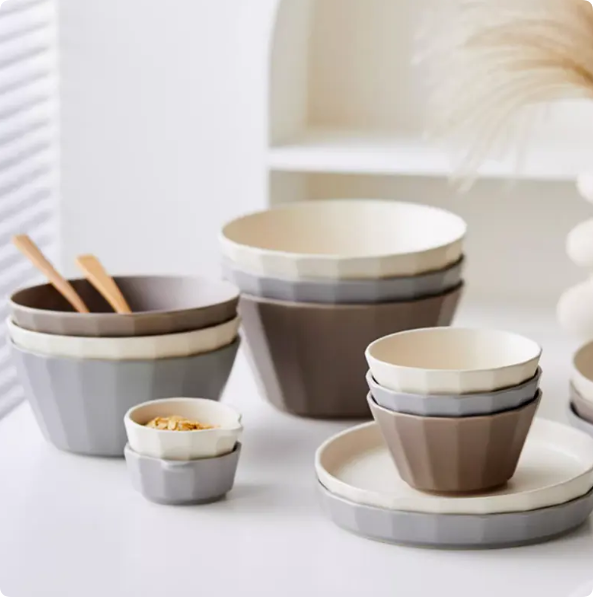
For example, a retailer could develop a collection around:
- Sand + cream
- Olive + beige
- Navy + ivory
- Terracotta + brown
- Charcoal + stone gray
- Sage + warm white
The same glaze concept can then be applied across different product shapes.
A dinner plate may have a lighter center and darker rim.
A cereal bowl may show more glaze pooling around its curved interior.
A mug may combine a darker exterior with a lighter drinking surface.
These pieces can look different while still belonging to the same family.
That is particularly useful for private label stoneware dinnerware because retailers can create a recognizable collection instead of selling disconnected ceramic products.
2. It Makes Products Feel More Premium Without Excessive Decoration
Premium does not necessarily mean complicated.
In fact, many modern consumers prefer products that look simple but have interesting material details.
A layered glaze finish can create this effect.
Instead of printing a large pattern on the surface, the visual interest comes from the ceramic itself.
This can make the product feel:
- More tactile
- More sophisticated
- More artisanal
- More natural
- More contemporary
- More suitable for premium retail positioning
For brands targeting minimalist or modern home interiors, premium layered glaze stoneware plates can be especially attractive because they offer personality without overwhelming the dining table.
3. It Supports Storytelling Around Craftsmanship
Consumers increasingly want to understand what makes a product special.
A retailer can talk about the clay body, glaze development, firing process, handmade-inspired variation, or the inspiration behind a collection.
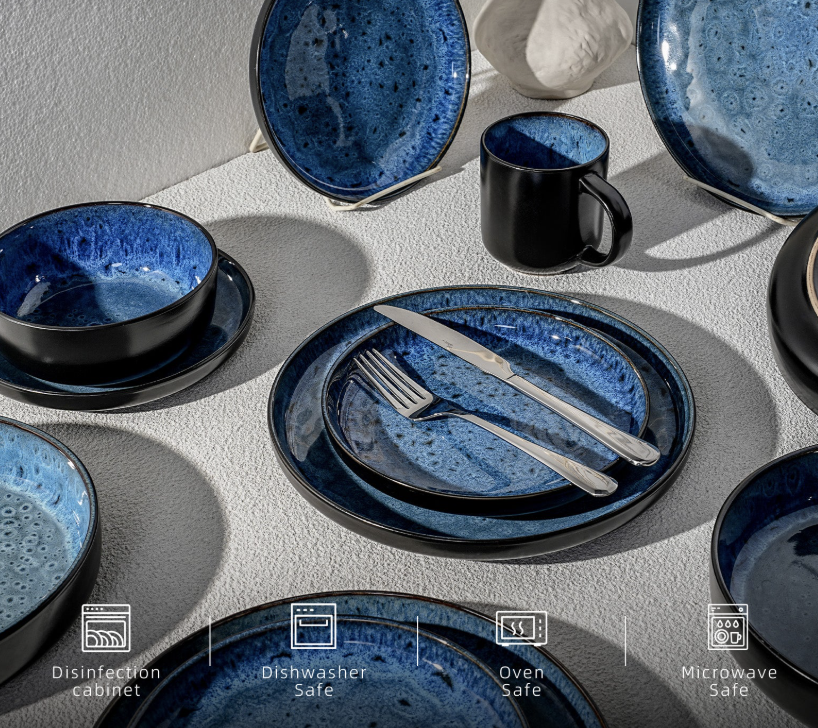
That creates an opportunity for storytelling.
Instead of saying:
“Blue ceramic dinner plate.”
A product page could communicate something closer to:
“A stoneware dinner plate finished with layered ocean-blue glaze, creating subtle tonal variation inspired by coastal landscapes.”
The second description gives the customer something to remember.
It also creates useful content for product pages, packaging, social media, catalogs, and retail displays.
4. It Helps Create Coordinated Collections
Retailers rarely want to sell only one plate.
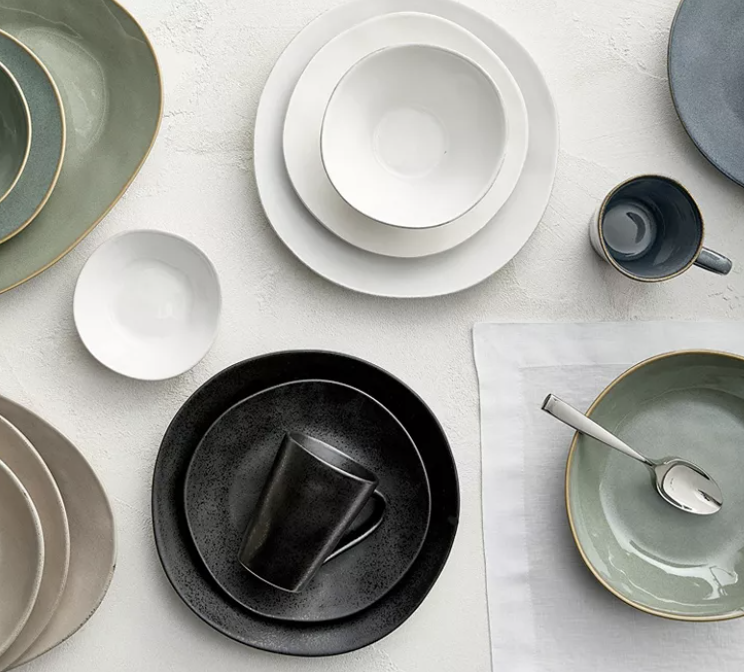
They want customers to purchase a set.
This is where layered glaze stoneware becomes even more commercially useful.
A single glaze system can be developed across:
- Dinner plates
- Side plates
- Pasta bowls
- Soup bowls
- Cereal bowls
- Mugs
- Serving platters
- Serving bowls
- Butter dishes
- Small dipping bowls
When the glaze language is consistent, customers can mix and match products while still creating a cohesive table setting.
This can increase the perceived value of the collection and create opportunities for cross-selling.
5. It Works Across Different Retail Aesthetics
Another advantage is versatility.
Layered glaze does not automatically mean rustic.
With the right glaze formulation and shape, it can look:
- Rustic
- Scandinavian
- Contemporary
- Japandi
- Coastal
- Organic modern
- Farmhouse
- Minimalist
- Premium casual
The shape and glaze need to work together.
A soft reactive glaze on a handmade-looking form may create a rustic appearance.
The same concept on a thin-rimmed, clean-profile stoneware plate may feel much more contemporary.
This gives buyers considerable freedom when developing a custom stoneware dinnerware collection.
6. It Performs Well in Lifestyle Photography
This is an underrated advantage for e-commerce brands.
Online shoppers cannot physically touch tableware before purchasing.
Photography therefore has to communicate texture, depth, and quality.
Layered glaze can help create more interesting images because the surface reacts differently to natural and artificial light.
A plate photographed next to linen napkins, wooden furniture, glassware, fresh bread, or seasonal food can look highly lifestyle-oriented.
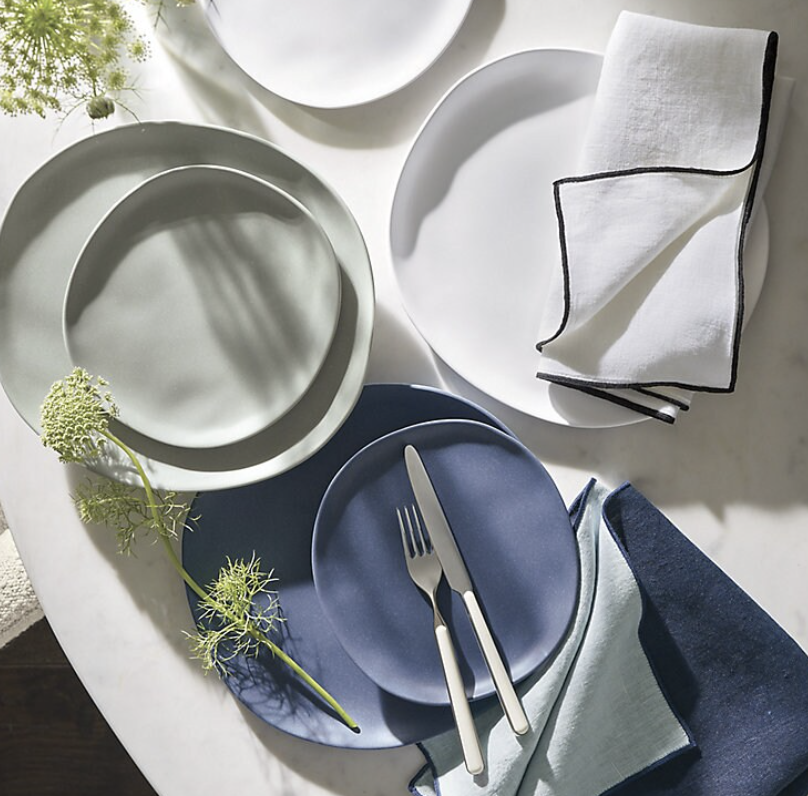
For online retailers, this makes layered glaze ceramic tableware for e-commerce brands a potentially strong choice for visual merchandising.
The glaze itself becomes part of the photograph.
7. It Can Help a Retailer Build a Signature Product
Some of the strongest private-label products are not necessarily completely new inventions.
They are familiar products with a recognizable twist.
A dinner plate is familiar.
A stoneware mug is familiar.
A pasta bowl is familiar.
But when a retailer combines a distinctive shape with a proprietary glaze combination, the product can become much more recognizable.
For example:
Shape + glaze + color palette + packaging + photography + brand story = signature collection
That is much harder for competitors to copy than simply choosing a generic white plate from a catalog.
Layered Glaze vs. Other Tableware Finishes: What Should Buyers Choose?
Not every retailer needs layered glaze.
The right finish depends on the brand’s positioning, price point, target consumer, and operational requirements.
| Finish | Visual Character | Branding Potential | Typical Retail Positioning | Key Buyer Consideration |
|---|---|---|---|---|
| Plain single-color glaze | Clean, uniform, simple | Moderate | Mass-market to mid-range | Consistency and price |
| Printed pattern | Graphic, decorative, recognizable | High | Lifestyle, gift, seasonal | Artwork, printing quality, MOQ |
| Reactive-style glaze | Organic, varied, artisanal | Very high | Premium casual, boutique | Color consistency and controlled variation |
| Layered glaze | Deep, dimensional, sophisticated | Very high | Mid-range to premium | Glaze development and batch control |
| Matte glaze | Soft, contemporary, understated | High | Modern, minimalist | Surface durability and stain resistance |
| Speckled glaze | Casual, handmade-inspired | High | Rustic, farmhouse, café | Speckle distribution and repeatability |
| Unglazed/raw ceramic accents | Natural, tactile | High | Artisan, organic, design-led | Surface protection and cleaning |
The important point is not that layered glaze is universally better.
It is that layered glaze gives retailers another way to differentiate a product without relying heavily on printed decoration.
How Well-Known Global Tableware Brands Use Surface, Color, and Design
When researching a new collection, buyers can learn a lot by studying established international tableware brands.
The following five brands are useful references because each demonstrates a different approach to creating a recognizable tableware identity.
Le Creuset: Strong Color Recognition
Le Creuset is widely recognized for its bold, coordinated color strategy.
Its tableware and cookware collections demonstrate how consistent color can become a major part of brand recognition. Instead of treating color as an afterthought, the brand makes it central to the product experience.
Lesson for retailers:
A distinctive glaze color can become one of the strongest visual identifiers of a collection.
Denby: Heritage Meets Everyday Function

Denby has built a strong reputation around stoneware and everyday tableware with a balance of craftsmanship, functionality, and contemporary design.
Its products show how ceramic tableware can communicate a sense of heritage while remaining relevant to modern homes.
Lesson for retailers:
Stoneware does not need to look overly rustic to communicate craftsmanship.
Royal Doulton: Design With a Strong Heritage Story
Royal Doulton is another useful reference for buyers studying the connection between ceramics and brand identity.
Its collections demonstrate how tableware can combine traditional ceramic heritage with contemporary designs and coordinated collections.
Lesson for retailers:
A strong story can make a ceramic collection more memorable than specifications alone.
Villeroy & Boch: Collection-Based Table Setting
Villeroy & Boch demonstrates the commercial power of building tableware collections rather than treating every plate, bowl, and cup as an independent item.
Its product ranges cover different aesthetics and occasions, helping customers build coordinated table settings.
Lesson for retailers:
A glaze concept becomes more valuable when it can be extended across a complete collection.
Iittala: Minimalism and Signature Design
Iittala is well known for Scandinavian-inspired design and strong visual consistency.
Its approach illustrates how relatively simple forms can become iconic when color, proportion, material, and design language are carefully controlled.

Lesson for retailers:
You do not need an overly complicated pattern to create recognizable tableware.
How to Build a Layered Glaze Collection for Your Brand
Choosing a glaze from a supplier’s existing catalog is easy.
Developing a glaze system that genuinely belongs to your brand is more strategic.
A good OEM or ODM project should begin with the brand rather than the factory’s available colors.
Start With Your Target Customer
Ask who is actually buying the product.
Are you targeting:
- Young apartment owners?
- Premium home décor consumers?
- Restaurant operators?
- Gift buyers?
- Families?
- Boutique hotel groups?
- Specialty kitchen stores?
- Online shoppers looking for handmade-inspired tableware?
A glaze that appeals to a rustic farmhouse customer may not work for a luxury minimalist brand.
Decide on the Brand’s Color Territory
Try not to choose colors individually.
Think about a complete palette.
For example:
Earth Collection
- Warm beige
- Sand
- Clay
- Brown
- Olive
Coastal Collection
- Soft white
- Mist blue
- Ocean blue
- Deep navy
Modern Neutral Collection
- Ivory
- Taupe
- Gray
- Charcoal
This approach makes it easier to create coordinated product pages and retail displays.
Match the Glaze With the Shape
This is often overlooked.
A glaze can look completely different depending on the shape of the ceramic body.
Curved bowls naturally encourage glaze movement and pooling.
Flat plates may emphasize rim effects.
Mugs provide opportunities to create contrasting inner and outer finishes.
Serving platters can showcase larger areas of color variation.
Therefore, glaze development should happen alongside product development.
What Should Buyers Check Before Ordering Layered Glaze Stoneware?
A beautiful sample does not automatically mean a supplier can produce thousands of pieces consistently.
This is one of the most important things for professional buyers to understand.
Glaze Consistency Between Production Batches
Some degree of variation may be intentional.
Too much variation, however, can create problems.
Ask the manufacturer:
- How is glaze consistency controlled?
- What is the acceptable color tolerance?
- Are production samples retained?
- How are glaze batches documented?
- Can the same color be reproduced for future orders?
This becomes particularly important for retail brands that plan to reorder the same collection.
Food Contact Safety
For tableware, appearance is only one part of the equation.
Buyers should also confirm that the finished product meets the relevant food-contact requirements for their target market.
Depending on the destination, importers may need documentation related to:
- Lead and cadmium
- Food-contact safety
- Glaze composition
- Product testing
- Dishwasher suitability
- Microwave suitability
- Relevant regional standards
Do not assume that a beautiful glaze automatically means the product is commercially ready.
Durability
Retail customers expect dinnerware to survive normal everyday use.
Professional buyers should therefore consider:
- Glaze hardness
- Scratch resistance
- Chipping resistance
- Thermal shock performance
- Dishwasher performance
- Microwave suitability
- Staining resistance
A premium-looking product that quickly develops scratches or chips can damage a retailer’s reputation.
Variation Should Be Controlled, Not Random
One of the interesting characteristics of layered and reactive-style glazes is variation.
But there is a major difference between controlled variation and uncontrolled inconsistency.
Controlled variation means:
“Each piece has a slightly individual appearance within a clearly defined color range.”
Uncontrolled inconsistency means:
“The product you reorder six months later looks noticeably different from the original collection.”
For retail branding, the first is an advantage.
The second can become a problem.
How OEM and ODM Can Turn Layered Glaze Into a Private-Label Advantage
For buyers purchasing standard products, glaze is simply one product specification.
For an OEM or ODM buyer, it can become part of the intellectual and visual identity of the collection.
A factory can work with a buyer to develop combinations involving:
- Custom glaze colors
- Two-tone finishes
- Inner/outer color contrast
- Rim accents
- Speckled effects
- Matte and glossy combinations
- Custom shapes
- Embossed details
- Logo applications
- Coordinated mug and plate collections
- Custom packaging
The goal is not simply to make a plate look different.
The goal is to make the finished collection feel like it belongs to one brand.
How Retailers Can Use Layered Glaze Across Different Sales Channels
For Brick-and-Mortar Stores
Layered glaze works particularly well on shelves because the surface variation becomes visible from a distance.
Retailers can group several complementary colors together to create a strong visual block.
A customer may initially approach the display because of the colors and then discover the different shapes and sizes.
For E-Commerce Stores
Online retailers should photograph the glaze from multiple angles.
Useful images include:
- Full product view
- Close-up glaze texture
- Rim detail
- Top-down table setting
- Side profile
- Stacked products
- Individual color comparison
- Lifestyle dining scene
The product description should also explain whether variation is intentional.
This prevents customers from assuming that a slightly different glaze pattern means the product is defective.
For Restaurant and Hospitality Buyers
Restaurants can use layered glaze stoneware to reinforce the atmosphere of a dining concept.
A modern café might prefer muted gray-blue finishes.
A Mediterranean restaurant could use warmer earthy colors.
A contemporary hotel may choose understated neutral tones.
In these cases, tableware becomes part of the dining environment rather than simply a functional serving tool.
How to Price Layered Glaze Stoneware for Retail
A common mistake is comparing layered glaze stoneware directly with the cheapest plain ceramic products.
That may not be a fair comparison.
Retail pricing should consider the complete value proposition.
Think about:
Manufacturing cost + packaging + logistics + testing + breakage risk + product photography + brand positioning + retail margin
A more distinctive surface can support stronger positioning when the rest of the product experience matches it.
However, buyers should still be careful.
A complicated glaze process does not automatically justify a premium retail price.
The product must deliver enough visual and functional value to make the difference obvious to the customer.
Common Mistakes Retailers Make With Layered Glaze
Choosing a Beautiful Glaze Without Considering the Brand
A color can look beautiful on a sample but completely wrong for the retailer’s existing product range.
Always consider the wider brand identity.
Using Too Many Colors
More colors do not necessarily mean more variety.
Too many colors can make the collection look disconnected.
For many retail collections, three to six carefully coordinated colors can be more commercially effective than a large random palette.
Ignoring Reorder Consistency
A first shipment may look excellent.
The real test comes six months later.
If the retailer wants to reorder, the factory should have clear standards and retained samples for comparison.
Treating Glaze Variation as an Excuse for Poor Quality Control
“Every piece is unique” should never mean “every piece is unpredictable.”
Retail buyers need to distinguish artisan-inspired variation from unacceptable production defects.
Forgetting Packaging
Stoneware is relatively heavy and fragile compared with many household products.
A beautiful product can still become a poor retail product if packaging does not protect it effectively.
For e-commerce sellers especially, packaging should be considered from the beginning of the product development process.
A Practical Buyer Checklist Before Placing an Order
Before approving a production run, buyers should ideally confirm:
Product Design
- Is the shape suitable for the target market?
- Does the glaze match the brand identity?
- Are all pieces visually coordinated?
- Is the size suitable for everyday use?
Glaze
- Is the color range clearly defined?
- Is variation intentional and controlled?
- Has the final glaze been tested on the actual ceramic body?
- Can the color be reproduced for repeat orders?
Performance
- Is the product suitable for food contact?
- Is it dishwasher safe if required?
- Is it microwave safe if required?
- Has scratch and thermal shock performance been considered?
Production
- Has a pre-production sample been approved?
- Are acceptable quality tolerances documented?
- Can the manufacturer support future replenishment?
- Is the MOQ commercially realistic?
Packaging
- Is each piece properly protected?
- Is retail packaging required?
- Is the packaging suitable for e-commerce shipping?
- Can the packaging carry the private-label brand identity?
Frequently Asked Questions About Layered Glaze Stoneware Tableware
Is layered glaze stoneware good for everyday use?
Yes, provided the stoneware body and glaze system are properly manufactured and tested for the intended application.
For everyday retail dinnerware, buyers should verify durability, food-contact safety, dishwasher suitability, microwave suitability, and thermal shock performance according to their market requirements.
Does layered glaze make stoneware more expensive?
It can.
Additional glaze development, application steps, firing control, inspection, and quality requirements may increase production costs compared with simple single-color glazing.
However, the commercial value may also be higher because the finished product can have stronger visual differentiation and premium positioning.
Is every layered glaze stoneware piece unique?
Not necessarily.
Some glaze effects intentionally create subtle variations between pieces. However, professional production should still maintain a defined color and quality range.
The goal is controlled individuality, not unpredictable inconsistency.
Can I create a custom glaze color for my private-label tableware?
Yes, custom glaze development is possible for many OEM and ODM projects.
The exact feasibility depends on factors such as the ceramic body, glaze chemistry, firing temperature, production volume, and desired appearance.
A buyer should normally evaluate a sample before confirming mass production.
Can layered glaze be used on plates and bowls?
Absolutely.
It can be used across a broad range of stoneware products, including:
- Dinner plates
- Salad plates
- Pasta bowls
- Soup bowls
- Cereal bowls
- Mugs
- Serving platters
- Serving bowls
The final visual effect may change depending on the shape and surface area of each item.
Is layered glaze suitable for restaurant tableware?
It can be, especially for restaurants that want a more distinctive dining presentation.
However, commercial foodservice buyers should pay close attention to durability, chip resistance, stacking, dishwasher performance, and replacement availability.
For restaurant chains, repeatability is particularly important.
What is the difference between layered glaze and reactive glaze?
The terms are sometimes used differently by manufacturers.
In general, layered glaze refers to the use of multiple glaze layers or complementary glaze effects to create visual depth, while reactive glaze describes glaze behavior during firing that produces variations, movement, speckling, pooling, or other organic effects.
In commercial product development, buyers should focus less on the name and more on the actual finish, repeatability, testing, and production specifications.
What is the best way to sell layered glaze stoneware online?
Use high-quality lifestyle photography together with close-up images that show the glaze clearly.
The product description should explain the finish, intended variation, material, care instructions, and functional properties.
This is especially important for custom stoneware dinnerware for online retailers, because customers cannot physically examine the surface before buying.
Final Thoughts: The Glaze Can Become Part of the Brand
The best retail tableware does more than perform a function.
It communicates something.
It tells customers whether a brand feels modern or traditional, casual or premium, minimalist or expressive, mass-market or artisanal.
That is why layered glaze stoneware is worth looking at from a branding perspective.
The real opportunity is not simply to sell a plate with a more interesting surface.
It is to build a recognizable product language around shape, glaze, color, texture, packaging, and storytelling.
For retailers and private-label buyers, the most successful approach is usually to start with the customer and brand positioning, then develop the glaze around that strategy.
And this is where the right manufacturing partner matters.
EKA is a China-based ceramic tableware factory providing OEM and ODM manufacturing for global kitchenware, homeware, gift, hospitality, and e-commerce brands. From custom stoneware plates and bowls to coordinated tableware collections, buyers can work with a manufacturer to develop the shape, glaze, color, finishing details, packaging, and production specifications around their brand requirements.
Because ultimately, a good tableware collection should not look like something a retailer simply purchased.
It should look like something the brand created.