When guests walk into a luxury hotel restaurant, they notice much more than the food.
They notice the lighting, the table setting, the glassware, the cutlery—and yes, the dinnerware underneath the food.
A beautifully plated dish can lose some of its impact when served on a dull, uneven, or poorly matched plate. On the other hand, a well-designed fine porcelain dinner set can make even a simple dish look more refined.
That is one reason high-end hotels, fine dining restaurants, resorts, private clubs, cruise operators, and premium catering businesses continue to choose porcelain dinnerware for professional table settings.
But there is more to it than appearance.
For hospitality buyers, purchasing fine porcelain dinner sets is really about finding the right balance between luxury presentation, durability, operational efficiency, consistency, and long-term brand value.
So, why is fine porcelain dinnerware still such a strong choice for premium hospitality projects?
Let’s take a closer look from a buyer’s perspective.
What Makes Fine Porcelain Dinner Sets Different?
Fine porcelain is not simply “white ceramic.”
Porcelain is typically made from refined ceramic raw materials and fired at high temperatures, producing a dense, hard, low-porosity body. Its smooth surface, clean appearance, and ability to achieve relatively thin yet strong forms make it especially attractive for premium tableware.
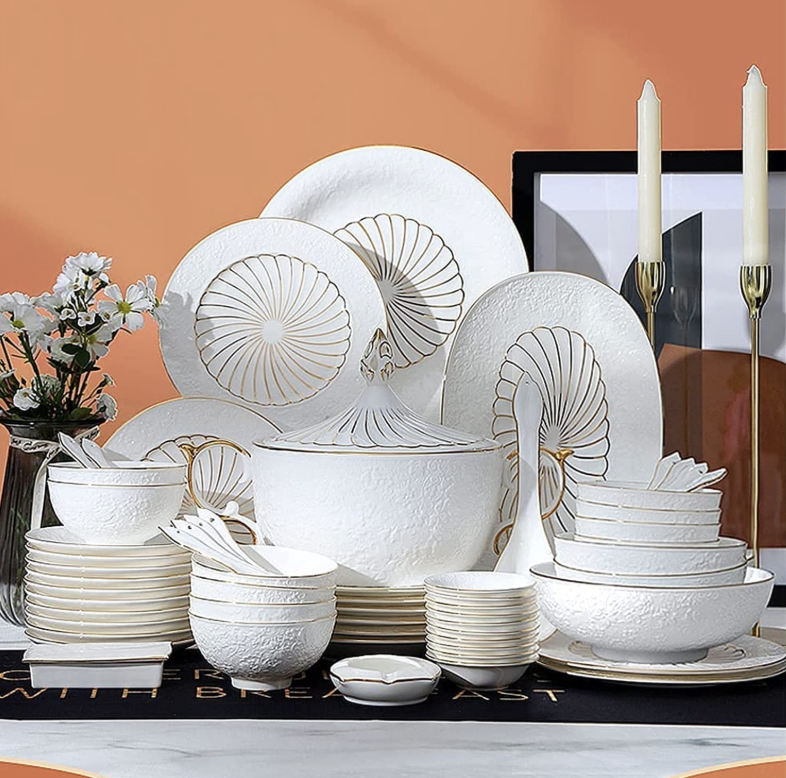
A quality porcelain dinner set can combine a refined visual appearance with practical performance.
For hospitality buyers, this combination matters.
A hotel may need thousands of dinner plates, side plates, soup bowls, dessert plates, cups, and serving pieces. These products may be handled dozens of times every day, loaded into commercial dishwashers, moved between kitchens and dining rooms, stacked in storage areas, and exposed to repeated thermal cycles.
The dinnerware has to look premium—but it also needs to work hard.
That is where fine porcelain becomes particularly interesting.
Why Do Luxury Hotels and Restaurants Prefer Porcelain Dinnerware?
The easiest answer is simple:
Fine porcelain offers the visual refinement expected by luxury hospitality while providing the functional performance required for daily professional use.
There are several reasons behind this preference.
1. Fine porcelain immediately creates a premium table setting
First impressions matter in hospitality.
Guests may not consciously think, “This restaurant is using high-fired porcelain,” but they can feel the difference when the table looks clean, elegant, coordinated, and intentional.
The bright white body of porcelain creates a neutral background for food. It allows sauces, vegetables, meat, seafood, desserts, and colorful garnishes to stand out.
For fine dining restaurants, this is particularly valuable because plating is part of the overall dining experience.
A white porcelain dinner plate can provide the visual “canvas” that chefs need.
2. Porcelain works across different hospitality styles
One of the biggest advantages of porcelain is versatility.
The same basic material can support very different aesthetics:
- Minimalist white hotel dinnerware
- Contemporary fine dining plates
- Classic luxury hotel tableware
- Modern European restaurant dinner sets
- Japanese-inspired porcelain plates
- Elegant banquet dinnerware
- Boutique hotel breakfast sets
- Premium café and dessert service
- Custom branded restaurant tableware
This makes porcelain especially attractive to buyers managing multiple concepts or properties.
You do not necessarily need an entirely different material for every restaurant style.
Instead, you can change the shape, profile, glaze, decoration, color, rim, texture, and accessories while keeping a consistent material platform.
Fine Porcelain vs. Stoneware vs. Bone China: Which Is Better for Hospitality?
This is one of the most common questions buyers ask.
There is no universal winner because the right material depends on the restaurant concept, operating environment, budget, and desired appearance.
| Feature | Fine Porcelain | Stoneware | Bone China |
|---|---|---|---|
| Appearance | Bright, refined, elegant | Rustic, natural, contemporary | Extremely refined and translucent |
| Body | Dense and relatively non-porous | Dense but generally heavier | Very fine and lightweight |
| Visual presentation | Excellent for fine dining | Excellent for casual/premium concepts | Excellent for luxury presentation |
| Typical weight | Moderate | Usually heavier | Usually lightweight |
| Design flexibility | High | High | High, but often positioned more luxuriously |
| Commercial use | Excellent when properly engineered | Excellent for many restaurant concepts | Excellent for selected premium applications |
| Chip resistance | Can be engineered for strong commercial performance | Generally good depending on formulation | Depends strongly on product design and manufacturing |
| Best fit | Hotels, fine dining, banquet, upscale restaurants | Casual dining, lifestyle restaurants, cafés | Luxury hospitality, premium dining, high-end service |
| Procurement advantage | Strong balance of luxury and durability | Strong value and tactile character | Exceptional refinement and premium positioning |
For many hospitality buyers, fine porcelain occupies a particularly useful middle ground.
It looks luxurious enough for an upscale dining environment without necessarily pushing the purchasing cost as high as some ultra-premium materials.
3. Durability Matters More Than Buyers Sometimes Expect
Luxury does not mean fragile.
In fact, high-end hospitality buyers can be more demanding about durability than ordinary consumers.
A consumer may use a dinner plate once or twice per day.
A hotel restaurant may use the same type of plate repeatedly throughout breakfast, lunch, dinner, room service, banquets, and events.
That changes the purchasing equation completely.
What should buyers look for in durable porcelain dinnerware?
When sourcing durable porcelain dinnerware for hotels and restaurants, buyers should evaluate:
- Body density
- Firing temperature
- Edge strength
- Glaze quality
- Thermal shock performance
- Resistance to staining
- Resistance to repeated washing
- Stackability
- Weight
- Shape consistency
- Rim thickness
- Decoration durability
A plate that looks beautiful in a showroom but chips easily during daily operations is not a successful hospitality product.
This is why experienced procurement teams look beyond photographs.
They want samples.
They want test reports where relevant.
And they want to understand how the dinnerware behaves under actual commercial conditions.
4. Porcelain Is Well Suited to Repeated Commercial Washing
Hospitality dinnerware has a very different life from household tableware.
Restaurant plates may go through commercial dishwashing equipment repeatedly, often at high temperatures and with strong detergents.
Commercial-grade porcelain is exceptionally well-suited for repeated commercial washing because its high firing temperature (exceeding 2,300°F) vitrifies the clay into a dense, non-porous material. This hard, glassy surface resists water absorption, aggressive chemical detergents, and thermal shock during high-temperature sanitizing cycles.
Therefore, commercial dishwasher safe porcelain dinnerware is an important consideration when selecting products for hotels and restaurants.
A professional buyer should not simply ask:
“Is this porcelain dishwasher safe?”
A better question is:
“How does this product perform after repeated commercial washing?”
That distinction matters.
The body, glaze, decoration, and firing process all influence long-term performance.
For example, decorative metallic accents may require different handling than undecorated porcelain. Buyers should confirm the manufacturer’s care instructions before approving a design for intensive commercial use.
5. The White Surface Makes Food Look Better
This might sound like a design issue, but for high-end hospitality, it can become a commercial issue.
Food photography is now part of restaurant marketing.
Restaurants publish dishes on:
- TikTok
- Hotel websites
- Online menus
- Food delivery platforms
- Travel websites
- Restaurant review sites
A neutral white porcelain plate can help food colors stand out clearly in photographs.
A chef can use the plate as part of the composition rather than fighting against a busy pattern.
That is why white porcelain dinner plates for fine dining restaurants remain a popular sourcing category.
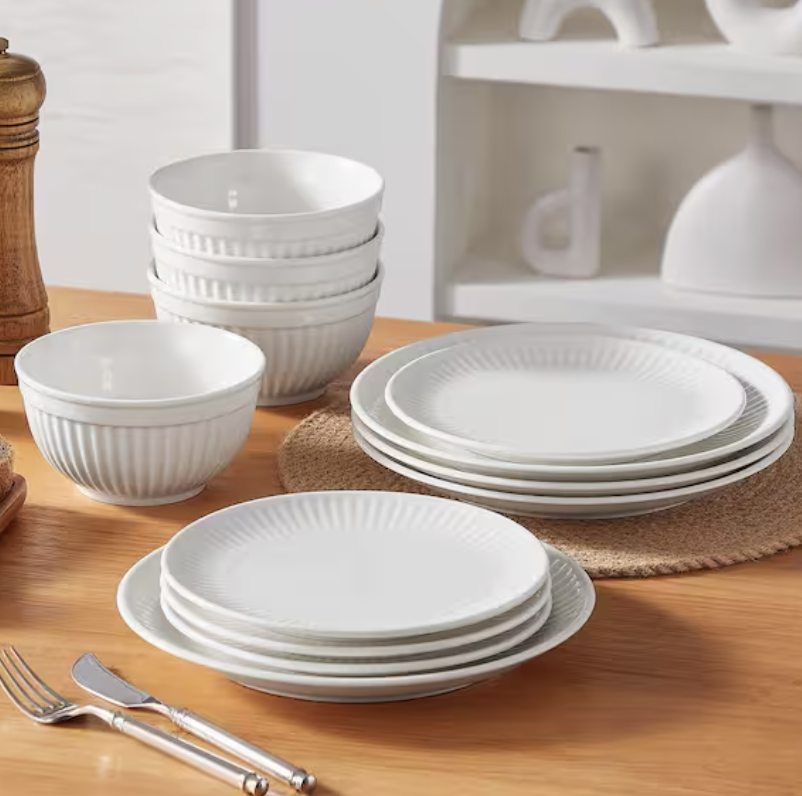
They are simple—but not boring.
With the right shape, rim, glaze, and proportions, white porcelain can look incredibly sophisticated.
6. Fine Porcelain Supports Different Plating Styles
Today’s premium restaurants do not all plate food in the same way.
Some prefer wide-rim plates.
Some prefer coupe plates.
Some use deep pasta bowls.
Others prefer organic shapes, shallow bowls, elongated plates, or sculptural serving pieces.
A well-developed porcelain collection can support all of these.
Popular porcelain dinnerware shapes for hospitality
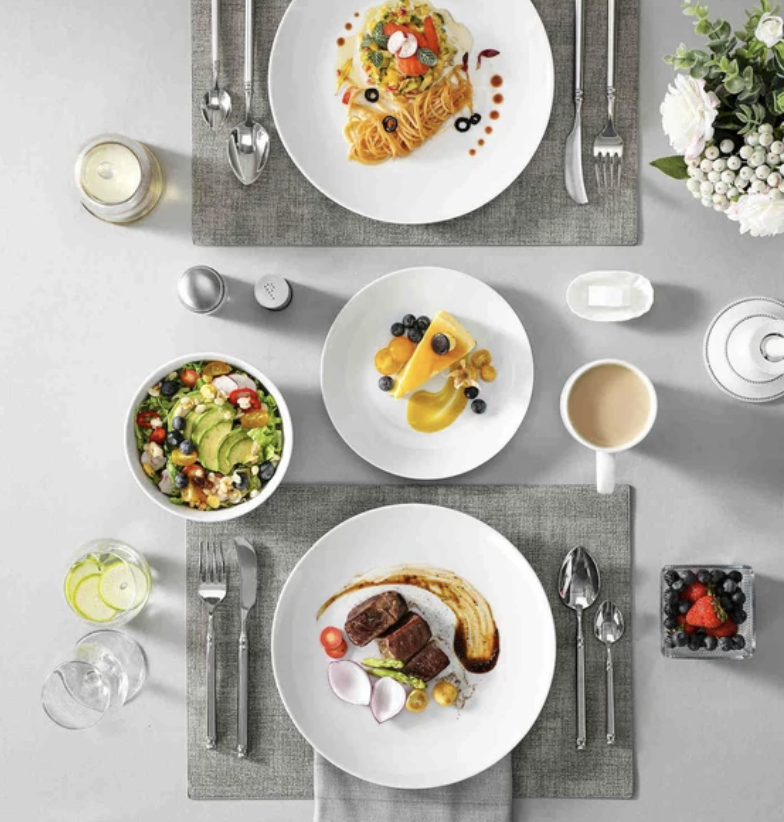
Coupe plates
Coupe plates have a clean, modern silhouette without a traditional raised rim.
They work particularly well with contemporary restaurants and minimalist food presentation.
Rimmed plates
Rimmed plates provide a classic structure and are often suitable for hotels, banquet service, and formal dining.
Pasta and gourmet bowls
Deep plates and pasta bowls can provide more visual depth while helping contain sauces and liquid foods.
Charger and presentation plates
These can be used to build a layered table setting and create a more formal dining experience.
Small plates and side dishes
Side plates, bread plates, dessert plates, and tapas pieces allow restaurants to create a consistent tableware language across different courses.
7. Consistency Is a Major Advantage for Hotel Procurement
Imagine a hotel group operating 20 restaurants across different locations.
They don’t want one restaurant using a slightly different white, another using a different plate profile, and another receiving dinnerware with inconsistent dimensions.
Consistency matters.
Professional buyers need:
- Consistent color
- Consistent dimensions
- Consistent glaze
- Consistent weight
- Consistent decoration
- Consistent packaging
- Consistent quality control
- Reliable replenishment
This is one reason custom porcelain dinnerware sets for hotels can be more attractive than purchasing random retail products.
A hospitality buyer is not only buying plates.
They are establishing a repeatable system.
8. Fine Porcelain Can Strengthen a Hospitality Brand
Dinnerware is often overlooked as a branding tool.
But think about a luxury hotel restaurant.
The table is one of the places where guests spend the most time.
The dinnerware is directly in front of them for the entire meal.
That gives the plate an unusual role in brand communication.
A restaurant might use:
- A distinctive rim color
- A custom embossed logo
- A subtle decal
- A unique plate profile
- A custom glaze
- A special relief
- A specific Pantone-inspired color
- A bespoke serving platter
These details can create visual consistency across the dining environment.
Custom branding is especially useful for hospitality groups
For buyers sourcing OEM porcelain dinnerware for hotel chains, customization can go beyond adding a logo.
The supplier may help develop:
- Custom shapes
- Custom sizes
- Custom colors
- Custom glaze finishes
- Custom patterns
- Embossed branding
- Decal decoration
- Gift-ready packaging
- Complete tableware collections
For a premium restaurant group, this can make the dinnerware feel like part of the interior design rather than a generic operational product.
Well-Known Fine Porcelain Brands Hospitality Buyers Can Study
When developing a new hospitality dinnerware collection, it can be useful to study established brands—not necessarily to copy them, but to understand how premium porcelain is positioned.
Bernardaud
Bernardaud is strongly associated with Limoges porcelain and high-end hospitality.
The brand’s hospitality offering focuses heavily on operational requirements such as shock resistance, heat retention, repeated high-temperature washing, ease of handling, and large-scale foodservice use. It also offers custom shapes and patterns for hotels and restaurants.
What buyers can learn: luxury tableware does not have to sacrifice operational thinking.
Rosenthal
Rosenthal has a dedicated Hotel & Restaurant Service business covering premium hospitality applications.
Its collections demonstrate how porcelain can combine sophisticated design with functionality. The brand also offers customized logos, borders, colors, and other design elements for hospitality projects.
What buyers can learn: customization becomes much more valuable when it is connected to a recognizable brand identity.
Ginori 1735
Ginori 1735 approaches porcelain tableware from a highly decorative and artistic perspective.
Its table collections emphasize details such as charger plates, course-specific plates, and coordinated table settings, combining traditional craftsmanship with contemporary hospitality aesthetics.
What buyers can learn: luxury tableware can turn the entire place setting into part of the guest experience.
MEISSEN
MEISSEN represents another end of the premium porcelain spectrum, where craftsmanship, heritage, distinctive shapes, and artistic decoration become major selling points.
Its Cosmopolitan collection, for example, combines a clean contemporary form with multiple decorative variations, including hand-applied gold and platinum finishes.
What buyers can learn: a premium dinner set can have a strong identity without relying on complicated shapes.
Vista Alegre
Vista Alegre is another established name worth researching when developing premium porcelain collections, particularly for buyers interested in European design language, decorative porcelain, and hospitality-oriented table settings.
What buyers can learn: traditional porcelain craftsmanship can be translated into contemporary collections that work across hospitality, retail, and gifting channels.
What Should Hospitality Buyers Check Before Ordering Fine Porcelain Dinner Sets?
This is where sourcing becomes more practical.
A beautiful catalog is only the beginning.
Before placing a bulk order, procurement teams should build a product specification sheet.
1. Material specification
Do not simply write “porcelain.”
Ask the supplier to clarify the actual material and body formulation.
Depending on the project, you may be comparing:
- Fine porcelain
- Hard porcelain
- Hotel porcelain
- Reinforced porcelain
- Bone china
- Stoneware
The terminology can vary between manufacturers and markets, so technical specifications are more useful than marketing labels alone.
2. Dimensions and weight
A restaurant may serve hundreds of meals every day.
A plate that is unnecessarily heavy can increase handling effort and storage requirements.
At the same time, a plate that is too thin may not provide the durability expected in commercial operations.
The ideal balance depends on the restaurant concept.
3. Edge durability
The rim is one of the most vulnerable areas of a plate.
Ask about edge strength and conduct practical sample testing.
You can simulate normal handling by:
- Stacking plates
- Moving stacks repeatedly
- Loading dish racks
- Washing samples
- Checking edges after repeated handling
4. Glaze quality
A high-quality glaze should provide a smooth, clean surface with good consistency.
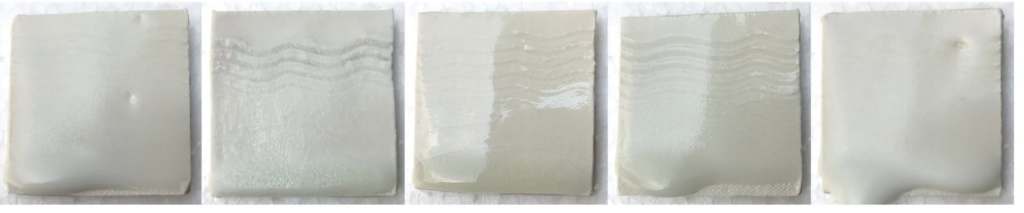
Look for:
- Pinholes
- Uneven glaze
- Color variation
- Crazing
- Rough edges
- Surface defects
- Uneven gloss
For premium hospitality, consistency is just as important as individual piece quality.
5. Decoration durability
If the design includes decals, printing, hand painting, metallic details, or colored rims, ask how the decoration is fired and what care requirements apply.
For intensive hotel use, decoration should be selected with actual operating conditions in mind.
What Does a Good Hospitality Dinnerware Supplier Need to Offer?
This is where many buyers discover that choosing a supplier is more complicated than choosing a plate.
A reliable fine porcelain dinnerware manufacturer for hospitality should be able to discuss both design and manufacturing.
Look for a supplier capable of supporting:
OEM development
You provide the specifications, drawings, brand requirements, or reference samples.
The factory develops the product according to your requirements.
ODM development
The supplier provides existing designs or helps modify its product platform to create a collection that fits your market.
Low-volume sampling
Before committing to large quantities, buyers should have the opportunity to review samples.
Stable mass production
A successful sample is not enough.
The supplier must reproduce the approved product consistently during mass production.
Quality control
Ask about inspection procedures for:
- Dimensions
- Weight
- Glaze
- Color
- Shape
- Decoration
- Firing defects
- Packaging
- Carton loading
Export packaging
Hospitality dinnerware is heavy and fragile.
Good packaging is part of product quality.
Buyers should discuss:
- Inner protection
- Carton strength
- Divider systems
- Palletization
- Drop protection
- Container loading
- Shipping marks
How Can Buyers Reduce the Total Cost of Porcelain Dinnerware?
The cheapest unit price is rarely the best procurement strategy.
For hotels and restaurants, total cost can include:
Purchase price + shipping + breakage + replacement + storage + handling + quality issues + replenishment cost
A slightly more expensive plate may become cheaper over its useful life if it performs better and requires fewer replacements.
This is especially important when a restaurant uses the same dinnerware collection for several years.
Think in terms of cost per use
For example, suppose one dinner plate costs slightly more but lasts significantly longer under the same operating conditions.
Its actual cost per meal may be lower.
This is why professional buyers should compare lifecycle value rather than only FOB or factory unit price.
Fine Porcelain Dinner Sets Are Also Valuable for Private Label Brands
The demand for fine porcelain is not limited to hotels.
It is also relevant to:
- Restaurant groups
- Boutique hotels
- Luxury resorts
- Wedding venues
- Private clubs
- Catering companies
- Premium cafés
- Gourmet retailers
- Homeware brands
- Gift companies
- Cross-border e-commerce sellers
For a homeware brand, a well-developed private label porcelain dinnerware set can create a premium product line without requiring the company to own its own ceramic factory.
This is where OEM and ODM manufacturing becomes useful.
A brand can develop a coordinated range consisting of:
- Dinner plates
- Salad plates
- Soup plates
- Pasta bowls
- Dessert plates
- Serving platters
- Serving bowls
- Cups
- Saucers
Instead of selling a single plate, the brand can sell a complete dining story.
What Porcelain Dinnerware Trends Are Worth Watching?
Hospitality buyers do not necessarily need to follow every trend.
In fact, luxury restaurants often prefer designs that will still look attractive several years later.
However, several design directions are worth watching.
Minimalist white porcelain
White remains one of the safest choices for high-end hospitality because it works with almost every cuisine and interior style.
Soft organic shapes
Slightly irregular or softly curved profiles can create a handcrafted feel without sacrificing a premium appearance.
Subtle relief
Embossed or relief textures can add visual interest while keeping the overall collection sophisticated.
Matte and satin finishes
These finishes can create a contemporary visual identity, particularly for boutique hotels and modern restaurants.
Mixed collections
Some hospitality concepts combine white porcelain with selected colored or textured pieces.
This gives chefs more flexibility without making the entire table setting visually complicated.
A Practical Buying Checklist for High-End Hospitality Buyers
Before approving a fine porcelain dinnerware supplier, ask:
Material
- What porcelain body is used?
- What is the firing temperature?
- What is the water absorption rate?
- Is the body suitable for intensive commercial use?
Performance
- Is it dishwasher safe?
- Is it microwave safe where required?
- How does it perform under repeated thermal cycles?
- Has the edge strength been tested?
Design
- Are custom shapes available?
- Can the factory develop custom sizes?
- Can colors and glazes be customized?
- Can logos or patterns be added?
Production
- What is the MOQ?
- What is the sample lead time?
- What is the mass production lead time?
- How is quality controlled?
Packaging
- How are individual pieces protected?
- What carton configuration is used?
- Is pallet packing available?
- Can the supplier support export-standard packaging?
Reordering
- Can the same collection be reproduced later?
- How are molds maintained?
- Can replacement pieces be supplied?
- How long can the supplier maintain the product specification?
These questions can save buyers a lot of trouble later.
Why Fine Porcelain Is Likely to Remain a Hospitality Favorite
Hospitality tableware is constantly changing, but the fundamental requirements have not changed much.
Hotels and restaurants still need dinnerware that looks good, performs reliably, supports food presentation, and fits the identity of the property.
Fine porcelain checks many of those boxes at once.
It can deliver the clean appearance of luxury dining while offering the strength, consistency, and versatility required for professional use.
More importantly, porcelain gives hospitality buyers room to create something distinctive.
The same material can become a minimalist white dinner set, an elegant hotel banquet collection, a colorful boutique restaurant range, or a fully customized private-label tableware series.
That flexibility is one of its biggest strengths.
Final Thoughts: Choosing the Right Porcelain Supplier Matters More Than Choosing the Most Expensive Plate
For high-end hospitality buyers, the goal should not be to find the most expensive porcelain dinner set on the market.
The real goal is to find the right balance of design, durability, functionality, consistency, customization, and total cost of ownership.
A beautiful plate that cannot survive a demanding restaurant environment is not a premium product.
Likewise, an extremely durable plate that does nothing for the dining experience may not deliver the brand value a luxury hotel or restaurant expects.
The best hospitality dinnerware sits somewhere in between.
It looks refined when a guest first sees it.
It performs reliably when the kitchen team handles it.
It remains consistent after repeated washing.
And it continues to represent the restaurant or hotel brand long after the first order has been delivered.
For global buyers looking for OEM and ODM fine porcelain dinnerware, EKA provides a manufacturing option in China for brands, hospitality projects, homeware distributors, gift companies, and cross-border e-commerce sellers. From porcelain plates and bowls to complete dinnerware collections, custom shapes, finishes, colors, and branding, the right factory partner can help turn a tableware concept into a scalable product line.
Frequently Asked Questions
Is fine porcelain good for hotel and restaurant use?
Yes. Properly manufactured fine porcelain can be an excellent choice for hotels and restaurants because it combines a refined appearance with a dense ceramic body and good resistance to everyday commercial use. However, buyers should verify the specific product’s performance rather than assuming all porcelain products have identical durability.
Is porcelain better than stoneware for fine dining?
Not necessarily in every situation, but porcelain is often preferred for fine dining because of its clean appearance, smooth surface, refined profiles, and ability to provide an elegant background for plated food. Stoneware may be a better fit for restaurants looking for a heavier, more rustic, handmade aesthetic.
What is the best porcelain dinnerware for luxury hotels?
The best option depends on the hotel’s concept and operating requirements. A good luxury hotel dinnerware collection should balance appearance, durability, stackability, weight, washing performance, replenishment availability, and brand identity.
Can porcelain dinnerware be customized with a hotel logo?
Yes. Depending on the factory and design, customization may include logo decals, printed patterns, embossed logos, colored rims, custom glazes, special shapes, and other decorative treatments. Buyers should confirm decoration durability and commercial washing requirements before mass production.
What should I look for in a porcelain dinnerware manufacturer?
Look for a manufacturer with consistent raw materials, stable firing processes, strong quality control, professional sampling capabilities, export packaging experience, and the ability to reproduce the same specifications for repeat orders.
What is the MOQ for custom porcelain dinnerware?
MOQ varies depending on the product, mold requirements, decoration, glaze, packaging, and factory production schedule. Standard products may have lower MOQs, while completely custom shapes or highly specialized designs generally require higher order volumes.
Is white porcelain still suitable for modern restaurants?
Absolutely. White porcelain remains one of the most flexible choices for professional dining because it works with almost any food presentation and interior design. Modern restaurants can also make white dinnerware more distinctive through unusual profiles, relief textures, satin finishes, colored rims, or custom shapes.
Can a Chinese porcelain factory produce private-label dinnerware?
Yes. Many Chinese ceramic manufacturers support OEM and ODM production for international homeware, hospitality, restaurant, gift, and e-commerce brands. Buyers should evaluate factory capabilities, quality consistency, sampling, communication, packaging, and repeat-order support before selecting a long-term supplier.
How can I test porcelain dinnerware before placing a bulk order?
Start with samples and test them under realistic conditions. Check dimensions, weight, stacking, glaze quality, decoration, dishwasher performance, handling, packaging, and visual consistency. For large hospitality projects, it is also useful to run a small pilot order before committing to full-scale production.